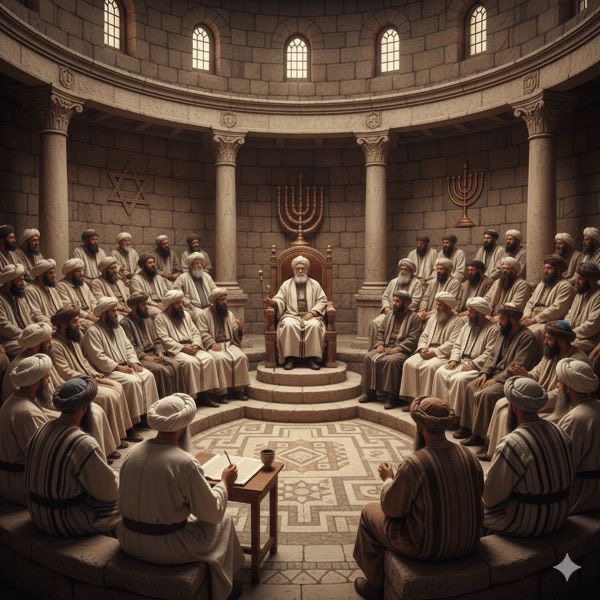
Did It Come From The Sanhedrin Or The Pharisees?
This is an important historical and biblical question because it concerns the transition from the world of Jesus and the apostles in first-century Judea to the organized Christian Church that developed over the following centuries. The short answer is that the Catholic Church did not originate from the Sanhedrin or the Pharisees as institutions. According to Catholic teaching, the Church was founded by Jesus Christ and built upon the apostles. Historically, Christianity emerged from within first-century Judaism, and its relationship with Jewish religious authorities changed significantly as the Christian movement spread among Jews and Gentiles.
To understand the distinction, we need to examine three things: what the Sanhedrin was, who the Pharisees were, and how the early Christian movement developed into the Catholic Church.
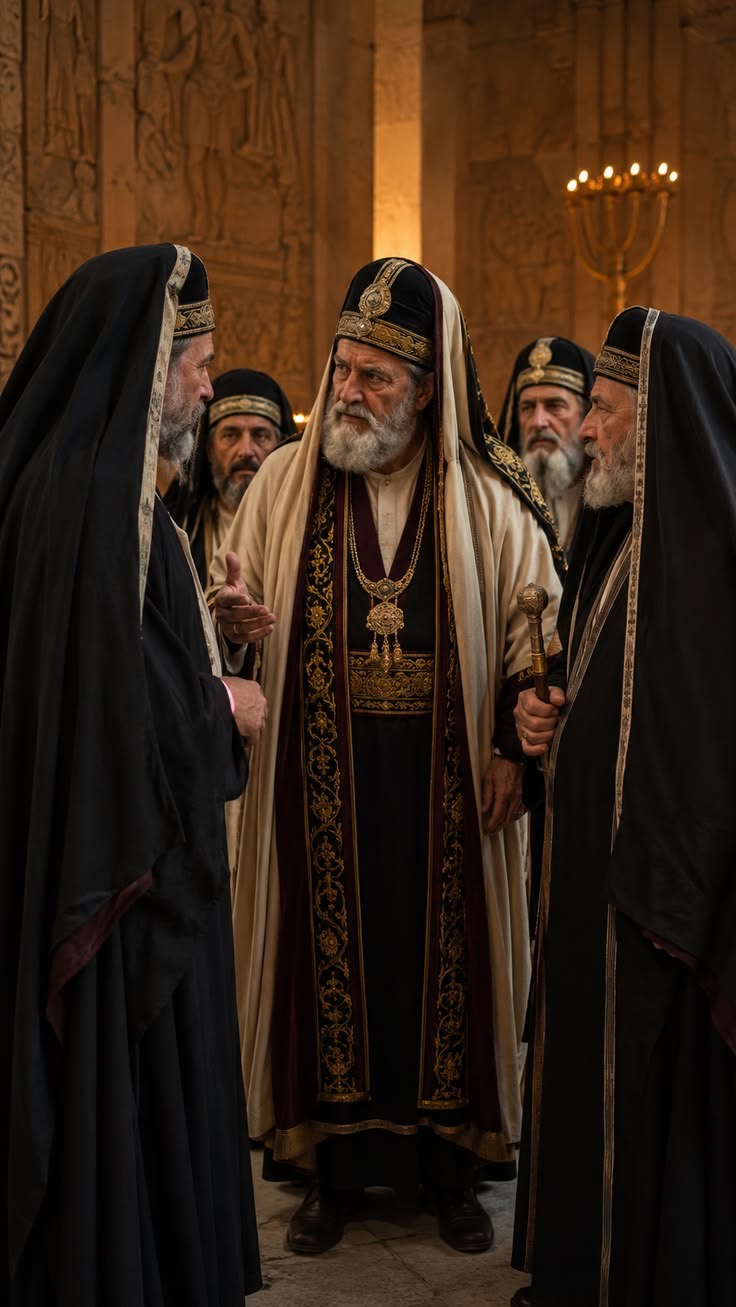
THE SANHEDRIN
The Sanhedrin was a Jewish governing and judicial council, not a church or religious denomination. During the time of Jesus, the Jerusalem council included leading priests, elders, and scribes. Its membership reflected different religious and political interests within Jewish society. The precise composition and powers of the council under Roman rule remain subjects of historical discussion.
The New Testament describes the Sanhedrin's involvement in the proceedings against Jesus.
- Chief priests and the council seek testimony against Jesus. Matthew 26:59–66
- Jesus is brought before the high priest and assembled religious authorities. Mark 14:53–64
- Leaders discuss the perceived threat Jesus poses. John 11:47–53
- The apostles are brought before the council after Jesus' resurrection. Acts 5:27–40
- Paul appears before the Sanhedrin, where Pharisees and Sadducees disagree. Acts 23:6–10
The Sanhedrin was therefore part of the Jewish religious and political environment in which Jesus ministered. But it was not the institution from which the Catholic Church emerged. Christianity developed from the movement of Jesus' followers, who proclaimed His resurrection and spread His teachings.

WHO WERE THE PHARISEES
The Pharisees were a Jewish religious movement that existed before Jesus' birth. They emphasized observance of the Mosaic Law, religious interpretation and tradition, and belief in the resurrection of the dead.
They were not all members of the Sanhedrin, although some Pharisees served on it. The council also contained Sadducean leaders and other influential figures. The Gospels record numerous disagreements between Jesus and certain Pharisees, particularly over the interpretation of the Law, Sabbath observance, purity, and religious authority.
FOR EXAMPLE:
- Matthew 23: Jesus rebukes scribes and Pharisees for hypocrisy and misplaced priorities.
- Mark 7:1–13: Jesus challenges traditions that can undermine God's commandments.
- John 3:1–10: Nicodemus, a Pharisee, comes to Jesus and speaks with Him.
- Acts 5:34–39: Gamaliel, a Pharisee and respected teacher of the Law, urges caution toward the apostles.
- Acts 23:6–9: Paul identifies himself as a Pharisee and invokes the resurrection, dividing the council over this doctrine.
These passages are important because they show that the Pharisees were not a single, uniform group opposed to everything Jesus taught. Some opposed Him; others engaged with Him or later defended the apostles.
After the destruction of Jerusalem and the Second Temple in AD 70, Pharisaic traditions contributed significantly to the development of rabbinic Judaism. Christianity, meanwhile, developed as a distinct movement that increasingly included Gentile believers. These were related historical developments, but they were not the same institution.
WHERE DID THE CATHOLIC CHURCH ORIGINATE?
We need to distinguish between the beginnings of Christianity and the later development of the Roman Catholic Church as an organized institution. The historical sequence is broadly as follows:
AD 30’s - Jerusalem And The Apostles
The earliest Christian community emerged among Jewish followers of Jesus. Acts 2 describes the growth of the community following Pentecost.
AD 40–60’s - Expansion Among The Gentiles
Paul and other missionaries spread Christianity throughout the Eastern Mediterranean. The Jerusalem Council in Acts 15 addressed whether Gentile converts had to observe the full requirements of the Mosaic Law.
AD 60’s The Christian Community In Rome
The church at Rome became increasingly significant. Christian tradition associates both Peter and Paul with Rome and their martyrdom there, although the precise details of the church's earliest leadership are not fully documented.
AD 107
The term "Catholic Church”, Ignatius of Antioch provides the earliest surviving written use of the expression "Catholic Church," meaning the universal Church. At this stage, it was not yet simply the modern denominational label "Roman Catholic.
Orthodox Church in America
AD 300s
A more established imperial-era Church. Following Constantine's legalization of Christianity in the early fourth century, Christian institutions gained public recognition and political influence. Church organization, doctrine, and the authority of major episcopal centers continued to develop.
The Catholic Church understands this history through the doctrine of apostolic succession: the belief that the bishops continue the ministry entrusted by Christ to the apostles, with the bishop of Rome regarded as Peter's successor. Historians can document the development of this belief and the growth of Roman authority, while the theological claim that this authority was divinely established is a matter of faith.
Were the Pharisees and Sanhedrin involved in the origins of Catholicism?
- Did Christianity emerge from a Jewish setting?
Yes, it did, Jesus, the apostles, and the earliest believers were Jewish. - Did the Sanhedrin establish the Catholic Church?
No. The Sanhedrin was a Jewish council, not a Christian institution. - Did the Pharisees establish the Catholic Church?
No. They were a Jewish religious movement that predated Christianity. - Did some Pharisees become followers of Jesus?
Yes. Acts 15:5 describes believers from the party of the Pharisees. - Did Pharisaic traditions influence later Christianity?
Christianity developed in a Jewish environment and shared some concepts with Jewish traditions, but it followed its own theological and institutional trajectory. - Did Roman Catholic structures develop over time?
Yes. The organization of bishops and the authority of the Roman See, developed over the early centuries.
The key historical sources support the distinction between the Jewish council, the Pharisaic movement, and the emerging Christian communities.
A deeper biblical question: Did the religious establishment reject Christ, and did the Church inherit its authority? This is where we must carefully separate biblical interpretation from historical evidence. The Gospels describe particular chief priests, elders, scribes, and other leaders opposing Jesus and participating in the events leading to His crucifixion. The Roman governor Pontius Pilate, however, exercised Roman authority in the execution. It would be historically inaccurate to attribute the actions of particular leaders to every Pharisee, every member of the Sanhedrin, or the Jewish people as a whole. Jesus and His first disciples were Jewish, and the earliest Christian movement arose within Judaism. The subsequent separation of Christianity from Judaism unfolded over time rather than in one single event.
From a Christian theological perspective, the Church's authority is understood through Christ and the apostles, not through a transfer of authority from the Sanhedrin or the Pharisees. The Catholic Church specifically identifies Christ as the source of its mission and the apostles as its foundation.
The strongest historically grounded argument is not that the Catholic Church originated from the Sanhedrin or Pharisees. It is that Christianity arose within first-century Judaism, then developed into a distinct religious movement whose leadership, doctrines, and institutional structures evolved over subsequent centuries.


