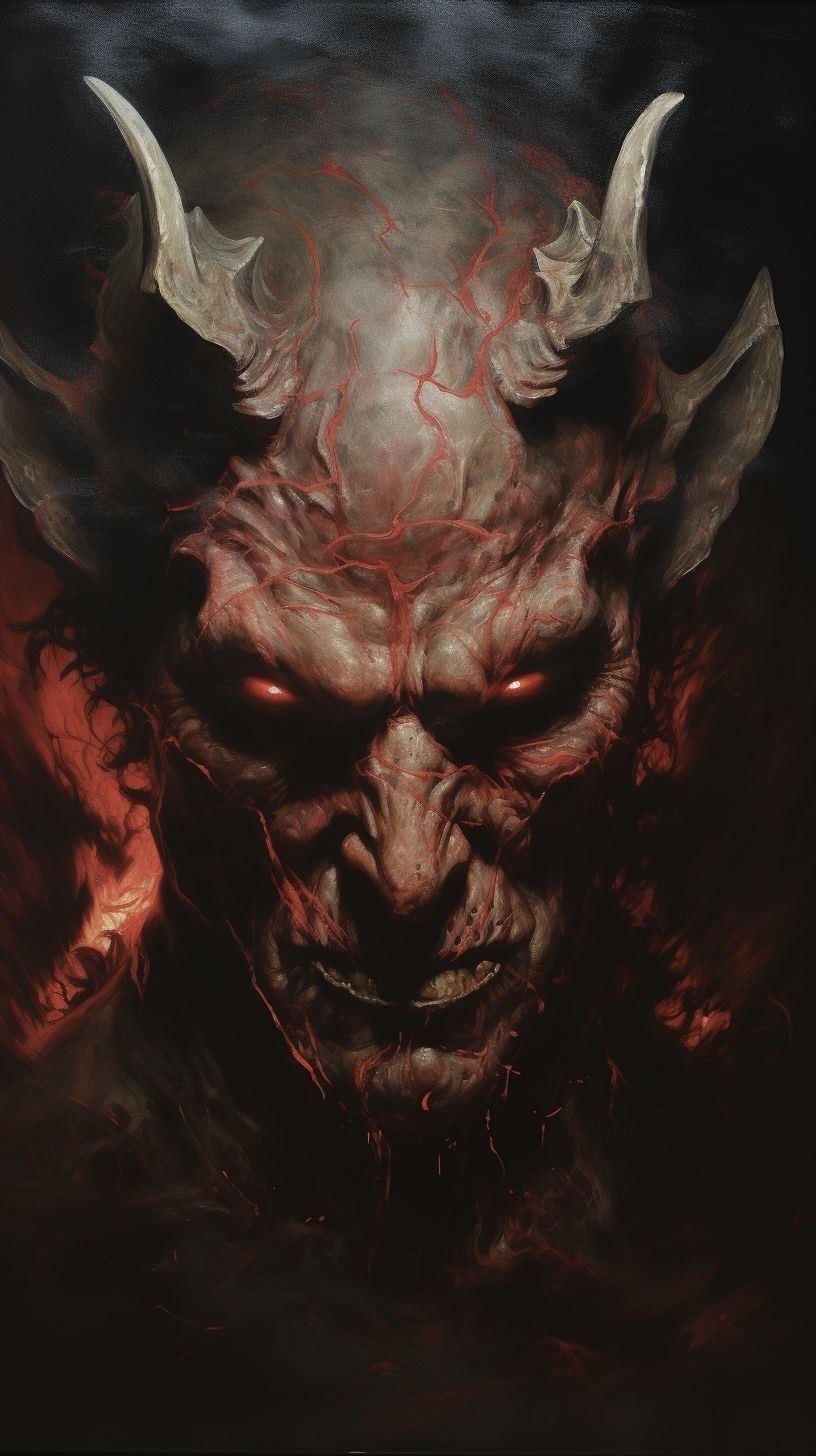
In Christian thought, demons are not a separate species of evil beings who have existed before mankind. They are understood as fallen angels, created by God, who by a free and definitive choice rejected God and His reign, which in and of itself makes these angels, demons. This understanding is central because it preserves both divine goodness and creaturely responsibility.
This article distinguishes between doctrine, which is what the Churches formally teaches, historical theology, which is how thinkers have developed that doctrine, and folklore, which is how popular culture has imagined it. Many popular lists of demons come from medieval catalogs or from folklore rather than from Scripture or Magisterium, (the official teaching authority of the Roman Catholic Church, vested uniquely in the Pope and the bishops in communion with him).
There are many ways people seek to learn about angels and demons, this effort examines the biblical foundations, the intertestamental literature of 1st Enoch, historical classifications, a lexicon of names and works, the theology of demonic action, the question of demonic remorse, and what exorcists report hearing during rites, with the caution that in this space concerning demons, the Catholic Church forbids curiosity about demons and considers demons to be liars.

BIBLICAL FOUNDATIONS
The Bible does not give a systematic demonology. It gives glimpses across centuries.
Old Testament
The Hebrew word ‘Satan’ means adversary or accuser. In Job 1-2 and Zechariah 3:1-2, Satan appears as a figure in the heavenly court who accuses man. In later Jewish thought, this role becomes personalized as an enemy of God.
Unclean spirits appear in several narratives. Deuteronomy 32:17 warns that Israel sacrificed to demons, not to God. Leviticus 16 describes the ritual of the scapegoat sent to Azazel (a demon) in the wilderness, a name later associated in 1 Enoch with a leading fallen angel. In 1 Samuel 16:14-23, after the Spirit of the Lord departs from Saul, an evil spirit from the Lord torments him, understood by later theology as God permitting a spiritual oppression.
Intertestamental Literature
The Book of Tobit, deuterocanonical for Catholics and Orthodox, introduces Asmodeus, who kills seven husbands of Sarah before they can consummate the marriage, out of lustful possessiveness. The Book of Daniel introduces the idea of spiritual princes over nations, as in the prince of Persia resisting the angel in Daniel 10:13.
New Testament
The New Testament uses several names:
- Beelzebul: called the prince of demons in Matthew 12:24, Mark 3:22, and Luke 11:15. The name derives from Baal-Zebul, lord of the dwelling, mocked as the lord of flies.
- Legion: In Mark 5:1-13, a man possessed in Gerasene says "My name is Legion, for we are many," indicating multiplicity and fragmentation.
- Abaddon/Apollyon: In Revelation 9:11, the angel of the abyss, whose Hebrew name Abaddon means destruction, and Greek Apollyon means destroyer.
- Mammon: In Matthew 6:24, wealth personified as a master that cannot be served alongside God.
- Belial: In 2 Corinthians 6:15, a term for worthlessness, "What accord has Christ with Belial?"
- Python Spirit: In Acts 16:16, a slave girl with a spirit of divination, literally a python spirit, associated with the Delphic oracle.
- Leviathan: While an Old Testament sea serpent image of chaos in Job 41, Psalm 74:14, and Isaiah 27:1, later tradition reads Leviathan as an image of the demonic.
Canonical anchors often cited for demonic names include: Legion- Mark 5:1-13, Asmodeus- Tobit 3:8, Mammon- Matthew 6:24, Belphegor- Numbers 25:3-5 as Baal-Peor, and Abaddon- Revelation 9:11
THE BOOK OF ENOCH - THE WATCHERS
1 Enoch is non-canonical for Roman Catholics and Protestants but is canonical for the Ethiopian Orthodox Church and is quoted in the New Testament epistle "Enoch, the seventh from Adam, prophesied” (Jude 1:14-15).
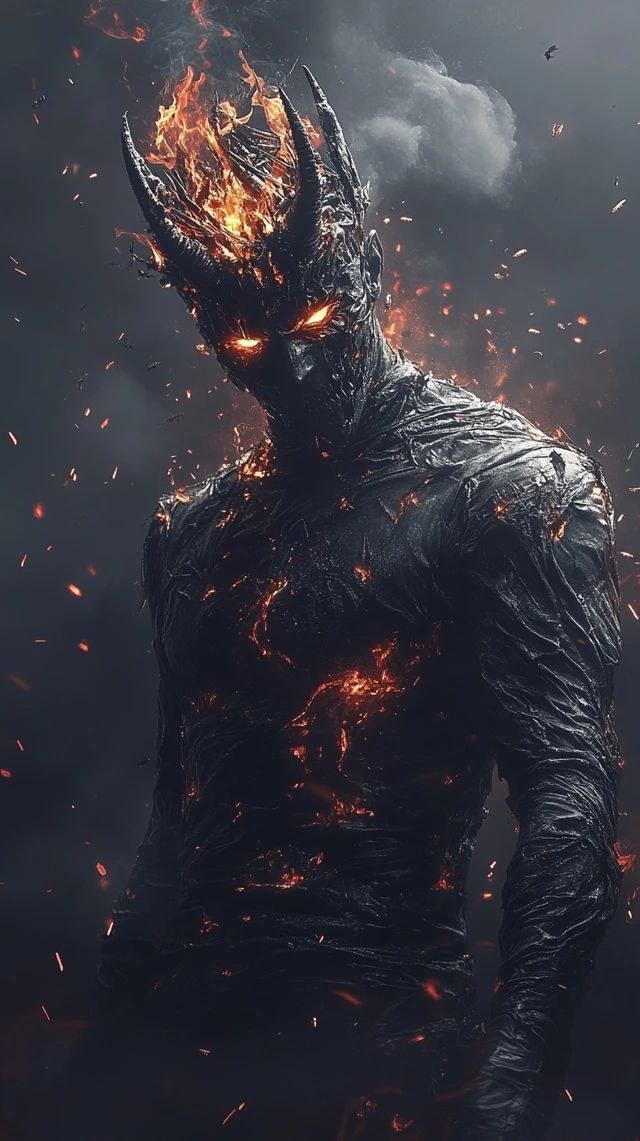
The most relevant section is the Book of the Watchers, 1 Enoch 6-11. It narrates that 200 Watchers, fallen angels, appointed to watch humanity, led by Semyaza and Azazel (demons), made a pact on Mount Hermon to take human wives. They descended, married women, and taught forbidden arts. Their offspring were the Nephilim, giants who consumed everything and turned violent.
The text says that when the Nephilim were destroyed in judgment and in mutual slaughter, their disembodied spirits remained upon the earth as evil spirits, afflicting humanity. This is one Jewish explanation for the origin of demons that attempts to connect Genesis 6:1-4, where the sons of God take daughters of men.
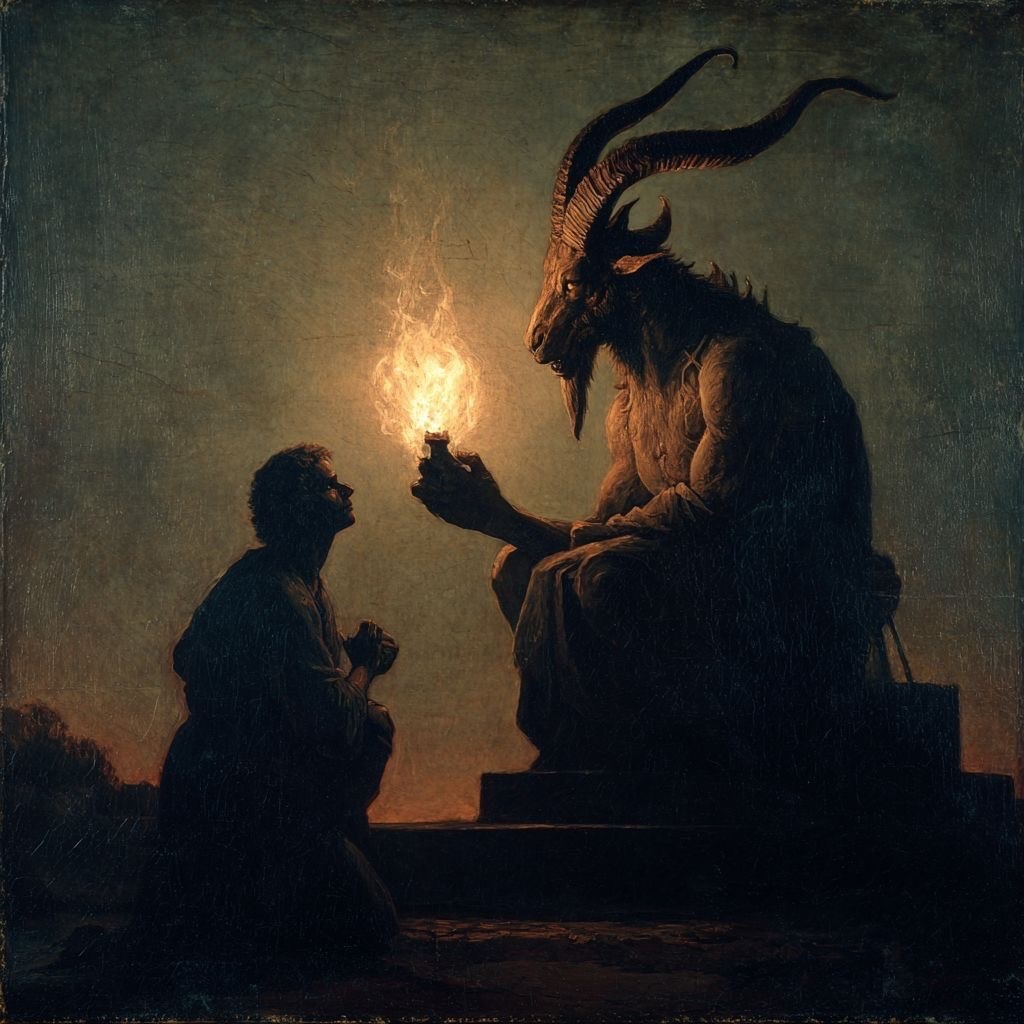
Azazel is singled out: he taught men to make swords, knives, shields, and taught women cosmetics and the art of beautifying the eyelids, and taught sorcery and astrology. Because he taught violence and fornication, he is to be bound hand and foot and cast into darkness in the desert of Dudael, covered with sharp rocks, awaiting final judgment.
The Church does not accept 1 Enoch as Scripture, but patristic writers and scholars use it to understand the Jewish worldview behind Genesis 6 and Second Temple demonology. The canonical teaching remains that demons are angels who fell before the creation of humanity, not spirits of dead giants, but Enoch illuminates why Second Temple Jews associated demons with impurity, deserts, and forbidden knowledge.
HISTORICAL CLASSIFICATIONS AND NAMES
Early Fathers
Origen taught that the devil fell through satiety and pride, and that demons retain free will but are fixed in evil. Augustine defined the devil as a fallen angel who turned from immutable good to mutable self, saying evil is not a substance but privation of good.
Medieval Classification
In 1589, German bishop Peter Binsfeld prepared a classification known as the ‘Princes of Hell’ in his Treatise on Confessions by Evildoers and Witches. He correlated demons with the seven deadly sins, to help confessors diagnose temptation:
| Demon | Sin it Represents | Reason |
|---|---|---|
| Lucifer | Pride | Wished to be like God |
| Mammon | Greed | Avarice, wealth as idol |
| Asmodeus | Lust | Destroyer of marriage |
| Leviathan | Envy | Resentment at divine goodness |
| Beelzebub | Gluttony | Lord of flies, excess, false worship |
| Satan | Wrath | Accuser, adversary, violent anger |
| Belphegor | Sloth | Inventive malice through laziness, wealth without labor |
This was pastoral, not dogmatic. It should not be read as a census of hell.
Other Classifications
Alphonsus de Spina in Fortalitium Fidei (1467) listed nine types of demons, later echoed by Michael Psellus in De Operatione Daemonum, categorizing demons by habitat and effect, such as fiery, aerial, terrestrial, aquatic, subterranean. These were attempts to systematize anecdotal reports.
Modern Reports from Exorcists
Fr. Gabriele Amorth, longtime exorcist of Rome, listed names he frequently encountered in ministry, citing Tradition: Satan or Beelzebub, Lucifer, Asmodeus, Meridian and Zebulun as examples.
Some contemporary exorcists, including Fr. Chad Ripperger, report hearing during exorcisms that Satan, Lucifer, and Beelzebub may be the same being revealing different aspects or personalities, an inversion of the Trinity. In this reported model, Satan is an inversion of the Father as father of lies, Lucifer is an inversion of the Son as false light-bearer, Beelzebub is an inversion of the Holy Spirit as lord of what is unholy and lord of false worship. This is reported speech under obedience, not doctrine.
NAMES AND WORKS
The following table summarizes major names found in Scripture and Tradition, their origin, and how pastoral literature describes their mode of temptation.
Satan
Job 1, Zechariah 3, Rev 12:9 Hebrew adversary, accuser, wrath, accusations, despair, rage, driving to hatred of God and neighbor.
Lucifer
Isaiah 14:12, The Latin Vulgate Light-bearer, pride, self-deification, intellectual pride, desire to be autonomous from God, self-worship.
Beelzebul
2 Kings 1, Matthew 12:24 Lord of dwellings, gluttony, false cults, excess, idolatry, seeking worship, but shielded from any truth, spiritual impurity Legion
Mark 5:9 Multiplicity, fragmentation, confusion, compulsive thoughts, feeling crowded by impulses.
Asmodeus
Tobit 3:8 Destroyer, lust in general, lust that destroys marriages, possessiveness, jealousy, pornographic compulsion leading to loss of wealth and meaningful connection with the Lord.
Leviathan
Job 41, Psalm 74, Isaiah 27 Twisted serpent, envy, chaos, envy, resentment at others good, cynicism, desire to drag down.
Mammon
Matthew 6:24 Wealth personified, greed, anxiety over money, using people for profit, avarice.
Belphegor
Numbers 25 as Baal-Peor Lord of Peor, sloth, cunning, sloth with ingenuity, getting wealth without work, inventing ways to avoid virtue.
Abaddon/Apollyon
Revelation 9:11 Destruction, abyss, despair, nihilism, fascination with destruction and apocalypse. Belial
Deut 13:13, 2 Cor 6:15 Worthlessness, lawlessness, leading to worthless pursuits, instruments of iniquity, anarchy.
NOTE: All such catalogs should be read pastorally. The Catechism of the Catholic Church warns that interest in demons should not become curiosity but should direct man to Christ's power.
THE WORK OF DEMONS - ORDINARY VS EXTRAORDINARY
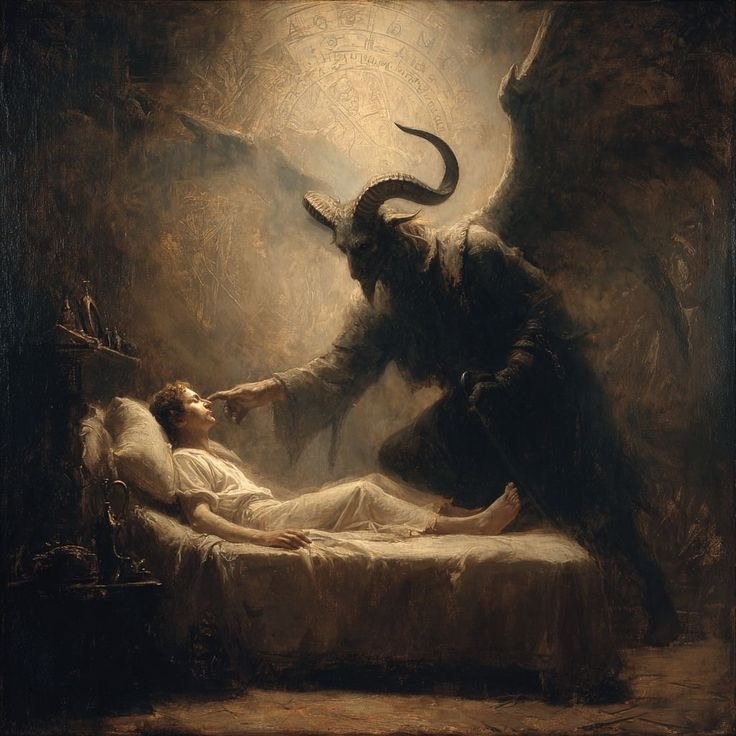
Theology distinguishes ordinary and extraordinary activity.
Ordinary Activity
This is temptation. The Catechism teaches that demons tempt by suggesting evil, amplifying concupiscence, and exploiting wounds and habits, which is true, but this assertion is limited in scope, their activities are beyond known limits. This is common to all, and is countered by prayer, sacraments, and virtue. A thought is not sin until consented to.
Extraordinary Activity
Catholic pastoral literature identifies four forms that may require discernment and possibly major exorcism, always with medical and psychological evaluation first:
1. Infestation: reported disturbances in a place, such as a house, noises, objects moving, oppressive atmosphere. Pastoral note: most cases have natural explanations. Church prays for blessing of place.
2. Vexation: physical attacks upon a person, such as scratches, blows, illness without medical cause. Pastoral note: must exclude medical causes.
3. Obsession: intense mental torment, intrusive images, relentless temptation, sense of being besieged internally, without loss of control. Different from clinical OCD, but requires professional discernment.
4. Possession: the body is controlled and faculties are impeded, with reported signs such as speaking unknown languages not learned, revealing hidden things, strength beyond nature, aversion to sacred things. This is rare and only declared after rigorous investigation.
Structure of the Rite
The rite is subdivided into prayers and rites and does not contain instructions for lay performance. Historically, it includes: - Litany of the Saints invoking mercy and intercession - Recitation of the baptismal promises, reminding the demon of Christ's victory - Psalms imploring protection, such as Psalm 90 - Scripture readings - Deprecatory prayers addressed to God requesting liberation - Imperative prayers addressed directly to the devil commanding departure in the name of Christ Specifically, sources note: the litany invokes mercy and the communion of saints, the psalms implore protection, the deprecative prayers are addressed to God and request liberation, and the imperative prayers are addressed directly to the devil.
With respect to the Catholic Church, only a priest delegated by the bishop may perform solemn exorcism, but in the Protestant faith, anyone can perform the casting of demons out of a person if they are equipped.
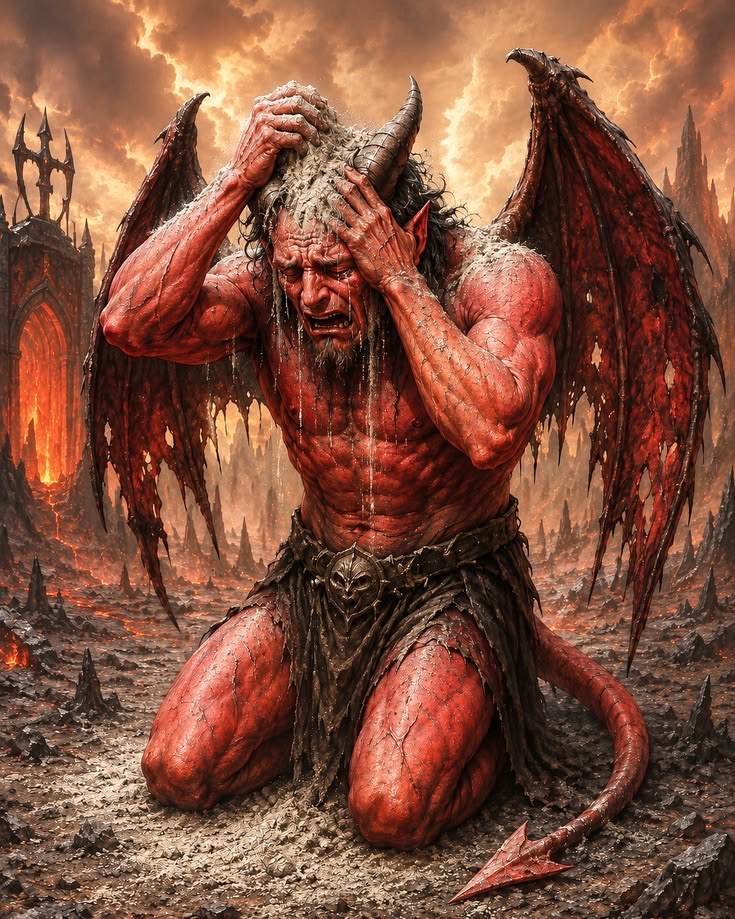
DO DEMONS FEEL REMORSE?
The classic answer comes from St. Thomas Aquinas, Summa Theologiae I. Aquinas argues that angels, being pure spirits without bodies, choose not through gradual deliberation as humans do, but with full knowledge and instantaneous will. A human can change their minds because our knowledge is partial, our will is influenced by passions, time, and body. An angelic will is fixed upon choosing. Therefore, demons are obstinate in wickedness and therefore have to be punished for ever. Their will is perverse and obstinate, they are not sorry for the evil of their sin but only for the pain of punishment.
There is an important distinction: they may lament their suffering but they do not repent out of love for God or sorrow for having offended goodness. Mercy ruled by wisdom does not reach those who render themselves unworthy as do demons and the damned who are obstinate. In other words, God does not withhold mercy arbitrarily, but the demons definitively refuse mercy. Forgiveness is impossible not because divine mercy is limited, but because the recipient has closed himself off irrevocably.
For humans, repentance is possible because we are in via, on the way, with time, ignorance, and weakness that mitigate culpability and allow conversion. For pure spirits, choice is total and final.
So when exorcism reports describe demons saying "I suffer," this is not remorse in the moral sense. It is complaint about punishment. They reportedly say "I will not repent" and "I hate Him," which accords with theological expectation of obstinacy.
WHAT DEMONS REVEALED THROUGH EXORCISMS
The Church strictly forbids seeking information from demons out of curiosity. The Roman Ritual instructs exorcists not to ask questions except those pertaining to liberation, and not to believe what demons say, for they are liars, the father of lies (John 8:44).
Nevertheless, exorcists report that under obedience, when commanded in the name of Jesus Christ, demons sometimes make statements that, while never taken as doctrine, are reported consistently across cases. Important disclaimer: These are reported by priests, not magisterial teaching. Demons can deceive even under exorcism. No new revelation is accepted from them.
Classic Reported Cases
- Emma Schmidt/Anna Ecklund 1928, Earling, Iowa. After earlier exorcisms in 1908, a 14-day exorcism in 1928 and later additional sessions totaling more than 60, conducted by Fr. Theophilus Riesinger, OFM Cap, with permission, reported phenomena including speaking and understanding Latin not known to the subject, hissing and howling, levitation, extreme aversion to sacred objects, spitting and vomiting objects. The case files were later studied and the vomiting motif influenced The Exorcist.
- Roland Doe (pseudonym) 1949, St. Louis. A 14-year-old boy from Maryland, after reported phenomena following use of a Ouija board, underwent multiple exorcisms by Jesuits, culminating in St. Louis. Reported brandings and scratchings appearing on the skin spelling words, hideous faces, furniture moving. The diary kept by Fr. Raymond Bishop became the basis for William Blatty's novel The Exorcist. The Church has never officially called this case a possession.
- Anneliese Michel 1975-1976, Klingenberg, Germany. A young woman with history of epilepsy and psychiatric treatment underwent 67 exorcism rites over ten months by Fr. Arnold Renz and Fr. Ernst Alt, under Bishop Josef Stangl. She reported voices identifying themselves as Judas, Hitler, Nero, Cain, and others, aversion to sacred objects, inability to eat. She died at age 23 weighing about 31kg. The subsequent trial convicted parents and priests of negligent homicide, leading to reforms requiring medical consultation. The case inspired The Exorcism of Emily Rose. It remains controversial and illustrates why careful discernment is required.
Modern Reports Consistently Mentioned by Exorcists
Fr. Gabriele Amorth (1925-2016) reported in his memoirs:
- Demons forced to reveal they fear Mary and her intercession, particularly under the title of Immaculate.
- They show intense aversion to the rosary, St. Michael the Archangel, and sacramental confession, where sins are forgiven.
- They admit Christ is Lord when commanded, quoting Philippians 2:10.
- They attempt to reveal hidden sins of bystanders to shame and discourage them, a tactic exorcists are instructed to forbid and ignore.
Fr. Chad Ripperger reports that under obedience demons have:
- Described inversion of the Trinity as noted in Section 4, claiming Satan, Lucifer, Beelzebub as the same being with different operations.
- Admitted they are liars and that they cannot be trusted.
- Claimed they are many, echoing Legion.
- Stated they entered through invitation, such as occult practices, unrepented grave sin, curses, though exorcists caution against simplistic causal explanations.
Common Themes Reported
- They claim multiplicity: We are many.
- They admit Jesus Christ is Lord and that Mary is to be honored, though with blasphemy mixed in.
- They reveal hidden knowledge to intimidate, but exorcists forbid listening.
- They show aversion to holy water, crucifix, relics, blessed salt, the name of Jesus and Mary.
- Their statements about remorse are typically: I suffer, I will not repent, Let me go, do not Forgive me. No authentic request for forgiveness out of love has been credibly reported. The theological principle remains: Even if a demon were to speak truth under command of Christ, it would only be permitted by God for the good of the afflicted, not to provide new doctrine. The Church relies on Scripture and Tradition, not on exorcism transcripts.
CONCLUSION
The Catholic Churches focus is not on cataloguing demons but on proclaiming Christ's victory. Colossians 2:15 states He disarmed principalities and powers. The ordinary means of protection to them is the ordinary means of holiness: participation in Mass, frequent confession, Eucharistic communion, prayer, wearing of scapular or miraculous medal as signs of faith not talismans, daily rosary, prayer to St. Michael. These practices are exclusive to the Roman Catholic Church, which in no way implies a singular process for exorcism.
The Church warns against seeking contact with spirits through Ouija boards, grimoires, divination, attempting to command angels or demons, and curiosity about the occult. Such practices are understood as opening a door, not because of magic, but because they represent a will turning away from God toward hidden powers.
For anyone distressed by fear of demonic activity, pastoral guidance is to seek spiritual direction, medical and psychological evaluation, and to live a sacramental life. Exorcism is a last resort, not a first step, and is always accompanied by pastoral care. Demons, in this vision, are tragic. Created good, they chose irrevocably against Love, and their activity, though real, is limited, permitted only within divine providence, and ultimately defeated.
- Leviticus 16:8-10, Azazel scapegoat rite; 1 Enoch 8:1, 10:4-8 Azazel.
- Tobit 3:8, 3:17, 8:1-3 Asmodeus.
- Mark 5:1-13 Legion.
- Revelation 9:11 Abaddon / Apollyon.
- Matthew 6:24 Mammon.
- Numbers 25:3-5 Baal-Peor, tradition linking to Belphegor; Deuteronomy 32:17.
- Jude 1:14-15 quoting 1 Enoch 1:9.
- 1 Enoch 6-11 Book of Watchers.
- Genesis 6:1-4 Sons of God.
- Peter Binsfeld, Tractatus de Confessionibus Maleficorum et Sagarum, 1589, Princes of Hell classification.
- Amorth, Gabriele. An Exorcist Tells His Story. Ignatius Press, 1999.
- Ripperger, Chad. Deliverance Prayers: For Use by the Laity and interviews on exorcism ministry. Sensus Traditionis Press.
- Catechism of the Catholic Church 391-395, 414, 2851-2854 on fallen angels and temptation.
- Rituale Romanum, De Exorcismis et Supplicationibus Quibusdam, 1999 revised. Structure notes: litany invokes mercy, psalms implore protection, deprecatory prayers addressed to God request liberation, imperative addressed directly to devil.
- Aquinas, Thomas. Summa Theologiae I, q.63-64: The Malice of Angels and Their Punishment: perverse and obstinate will, not sorry for evil of sin, mercy ruled by wisdom does not reach obstinate.
