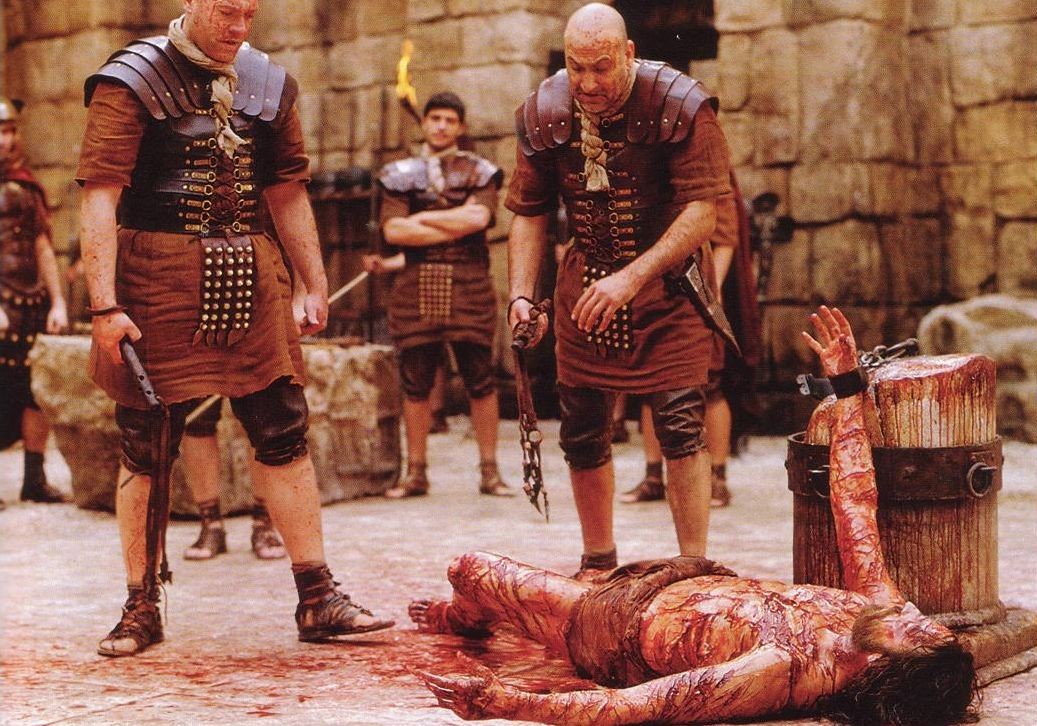
There is a garment called the Shroud of Turin, which is reputed to be a garment that Jesus of Nazareth was buried in, this garment, beyond the imagery attributed to it, has blood stains on it as well, blood considered to belong to Jesus. This Shroud, if authentic, is the only biological evidence of the existence of Jesus that exist. There is a distinction between what has actually been found in the bloodstains on the Shroud and what has been claimed about the DNA and Jewish ancestry of Jesus. The most important point is that the evidence does not establish that the blood is definitively Jesus' blood, but at the same time, the evidence does not invalidate the possibility that the blood is that of Jesus.
The genetic findings are genuinely interesting, especially in light of a question about the connection to the Jewish populations.
1. Why The Shroud Matters
The Shroud of Turin is a linen cloth bearing faint frontal and dorsal images of a man who appears to have suffered severe physical trauma. The cloth also contains reddish stains that have been studied as possible blood. The central historical question is whether this cloth is simply a later religious artifact or whether it could be the burial cloth of a man who lived in the first century. That question cannot be answered by one test alone. The evidence has to be considered in several categories: the blood, the image, the Sudarium of Oviedo, the DNA, the relationship of the genetic evidence to Jewish and Levantine populations, and the radiocarbon dating.
2. What Has Been Found in the Blood?
Investigations have reported blood-related biological material on the Shroud, including hemoglobin and other blood-associated components such as albumin, bilirubin and immunoglobulins. The stains have also been examined for their shapes and distribution, particularly around areas corresponding to wounds.
Some researchers have argued that the patterns are consistent with injuries associated with crucifixion. Other forensic work has shown that bloodstain patterns can sometimes be reproduced by different physical circumstances. Therefore, the stains can be studied as evidence, but they do not by themselves establish exactly how the person died or prove the person's identity. Older testing associated with the Shroud has reported type AB blood, and AB has also been reported for the Sudarium of Oviedo (Latin for "sweat cloth”) This is often presented as evidence of a Jewish or Middle Eastern connection. That conclusion goes farther than the evidence allows. AB blood is not unique to Jewish people or to people from the Middle East. Determining an ABO blood type from very old, repeatedly handled material is also much less secure than typing fresh blood. AB blood has been reported in connection with the Shroud, but AB cannot function as a genetic fingerprint proving that the blood belonged to Jesus or that the individual was Jewish.
4. The Sudarium Of Oviedo
The Sudarium of Oviedo is a separate, smaller cloth preserved in Spain. Unlike the Shroud, it does not contain a full-body image. It does, however, contain bloodstains concentrated around the head and face. Researchers have compared the bloodstain patterns on the Sudarium with the wounds represented on the Shroud and have argued that there are significant correspondences. This has led to the proposal that the two cloths could have been used on the same individual. That remains a hypothesis rather than an established identification. Similarities between two ancient bloodstained cloths are important, but they do not by themselves prove that both cloths belonged to the same person.
5. The DNA Evidence
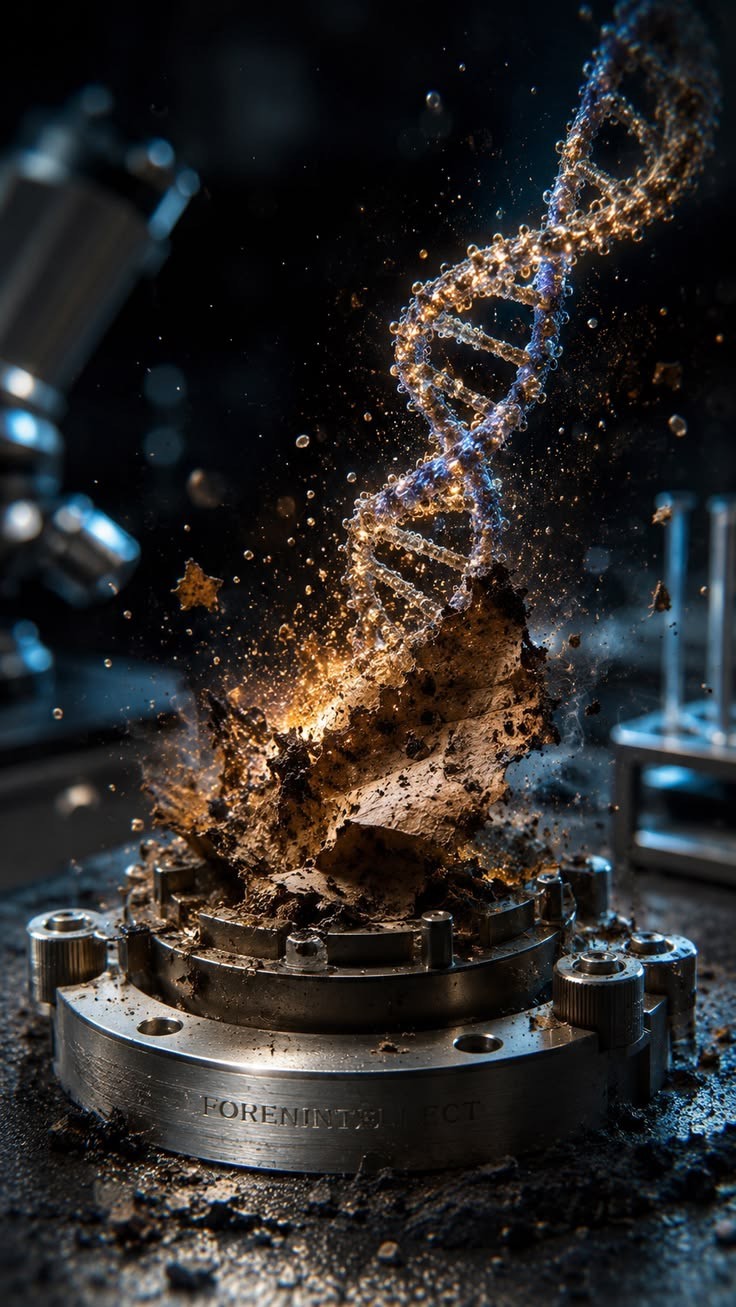
A 2026 study examined DNA traces from samples collected during the official 1978 investigation of the Shroud. The researchers identified several mitochondrial DNA lineages, including K1a1b1a, H2a2, H1b and H33. K1a1b1a is particularly noteworthy because the researchers describe it as a mitochondrial subclade strongly associated with Ashkenazi Jewish populations and also found among Sephardic Jews. But the same study produced an important warning about contamination: the same K1a1b1a lineage was found in the DNA of Professor ‘Baima Bollone’, one of the people who collected Shroud samples. This demonstrates why the DNA cannot simply be labeled 'Jesus DNA.' The Shroud has been handled by many people over centuries, and biological material from those people can remain on the cloth.
6. Another Lineage: H33
The 2026 research also identified H33, a comparatively uncommon mitochondrial lineage associated with the Near East and particularly represented among ‘Druze’ populations. (The Druze are a close-knit ethnoreligious group numbering roughly 1 to 2.5 million people worldwide, living primarily in Syria, Lebanon, Israel, and Jordan). This is geographically interesting because the Near East is the region in which Jesus lived. But H33, like the other mitochondrial lineages found on the cloth, cannot presently be assigned specifically to the original man represented by the image.
7. What Does This Have to Do With the Jews?
The question needs to be framed historically. Jesus was a first-century Jew who lived in Judea and Galilee. Therefore, if the Shroud is authentic and the man on it is Jesus, his biological ancestry should fit within the population history of the ancient Southern Levant.
Modern Jewish populations are not genetically identical to one another. Ashkenazi, Sephardic, Mizrahi and other Jewish communities have different histories. Nevertheless, genetic research has found substantial relationships between many Jewish populations and populations of the ancient Near East and Levant. Ancient-DNA research from the Southern Levant has also found substantial genetic continuity between ancient populations of the region and later populations. This does not mean that one modern population is identical to an ancient population. It means that there is documented population continuity mixed with later migration and admixture. That distinction matters when discussing the Shroud. Finding a mitochondrial lineage associated with a modern Jewish population does not prove that the original man was Jesus. But neither should modern population labels be treated as exact equivalents of first-century Judean populations.
8. Why Mitochondrial DNA Cannot Solve The Entire Question
Mitochondrial DNA follows one very specific line of ancestry: mother, mother's mother, mother's mother, and so on. It does not represent all of a person's ancestry. Therefore, even if uncontaminated mitochondrial DNA from Jesus were recovered, it would tell us about his direct maternal line. It would not provide a complete genetic description of Jesus, nor could it by itself prove every aspect of his Jewish ancestry.
9. The Genetic Picture
The easiest way to understand the current DNA evidence is to think of the Shroud as carrying a mixture of biological history.
- There is human DNA on the cloth.
- More than one mitochondrial lineage has been identified.
- Some lineages are associated with Europe and Western Eurasia.
- K1a1b1a is strongly associated with Ashkenazi Jewish populations and is also found among Sephardic Jews.
- H33 is associated with the Near East.
- K1a1b1a was also found in a documented Shroud collector, demonstrating the contamination problem.
- Because of this mixture, researchers cannot currently isolate a genetic profile that can confidently be identified as the DNA of the original man.
10. The Radiocarbon Dating Problem
Any serious discussion of the Shroud must address the 1988 radiocarbon tests. Laboratories at Arizona, Oxford and Zurich obtained a calibrated date of approximately AD 1260–1390. The original scientific publication interpreted that result as evidence for a medieval origin. Some Shroud researchers have challenged the representativeness of the piece tested in 1988, arguing that the sample may have come from an area affected by repair or later material. However, a 2026 study examining surviving fragments from the actual 1988 radiocarbon samples reported no evidence of contamination in those fragments and supported the conclusion that the tested material was genuine Shroud textile. Consequently, it would be inaccurate to say that science has disproved the 1988 radiocarbon date. The dating remains one of the strongest arguments for a medieval origin, while the representativeness and interpretation of the sample remain subjects of continuing discussion.
11. Putting The Evidence Together
The evidence becomes easier to understand when each part is kept in its proper place.
- The Shroud contains a body image and blood-related biological material.
- The blood evidence has been interpreted by some researchers as consistent with severe trauma and crucifixion, although the stains alone cannot establish identity.
- The Sudarium of Oviedo contains bloodstains around the head, and researchers have argued that some patterns correspond with the Shroud.
- AB blood has been reported on both cloths, but AB is not uniquely Jewish and cannot establish identity.
- The Shroud contains DNA from multiple mitochondrial lineages.
- K1a1b1a is associated with Ashkenazi Jewish populations and is also found among Sephardic Jews.
- That same lineage has been found in a documented Shroud collector, demonstrating the contamination problem.
- H33 provides a Near Eastern-associated mitochondrial lineage, but it cannot be assigned to the original man.
- Ancient-DNA research supports substantial continuity between ancient Southern Levantine populations and later populations, including populations from which Jewish communities developed.
- The 1988 radiocarbon tests produced a medieval date, approximately AD 1260–1390, and a 2026 study of surviving 1988 sample fragments found no evidence of contamination in those fragments.
12. What Can We Reasonably Say?
There are three different levels of conclusion, and keeping them separate is essential.
What The Evidence Establishes
- The Shroud is a linen artifact bearing a human body image.
- Blood-related biological material has been reported on the cloth.
- Human DNA from multiple individuals is present.
- Several mitochondrial lineages have been identified.
- One identified lineage has a strong association with Ashkenazi Jewish populations and is also found among Sephardic Jews.
- The DNA evidence is complicated by centuries of human contact with the cloth.
- The 1988 radiocarbon tests produced a medieval date.
What Remains Possible But Unproven
- That the Shroud was used in the burial of a first-century Judean.
- That the Sudarium and Shroud covered the same individual.
- That some original biological material from the man represented by the Shroud survives on the cloth.
- That the man represented by the Shroud was Jesus.
What The Evidence Does Not Prove
- It does not prove that the DNA currently identified on the Shroud belongs to Jesus.
- It does not prove that AB blood is Jewish blood.
- It does not prove that K1a1b1a is Jesus' maternal lineage.
- It does not overturn the 1988 radiocarbon result simply because other evidence is interesting.
13. The Biblical And Historical Connection
If the Shroud were eventually demonstrated to be the burial cloth of Jesus, the genetic question would t naturally into the historical setting of the first century. Jesus belonged to the Jewish population of Judea and Galilee, within the wider population history of the Southern Levant.
The Gospel accounts independently place Jesus within Israel's history. Matthew traces his genealogy through Abraham and David, while Luke gives a genealogy that ultimately reaches David and the ancestral history of Israel. Jesus' Jewish identity therefore does not depend upon the Shroud. The Shroud evidence, if authentic, would be a separate line of historical and biological evidence. This distinction is important. The biblical record establishes the historical and religious identity claimed for Jesus; genetic evidence from the Shroud would have to establish something different: whether the biological material on the cloth can be connected to the individual represented by the image.
14. The Question That Remains
The most important unanswered question is not simply, 'Does the Shroud contain Jewish DNA?' It contains DNA associated with several human populations, including a mitochondrial lineage strongly associated with Ashkenazi Jewish populations. The harder question is: 'Can any of that DNA be demonstrated to have come from the original man whose body produced the image?’ At present, the answer is no. The evidence is intriguing, but the centuries of handling make attribution extremely difficult. The strongest presentation of the Shroud evidence is therefore not to claim that one test proves everything. The more useful approach is to examine the evidence as a whole: the image, blood, wound patterns, the Sudarium, DNA, ancient population genetics, historical records and radiocarbon dating—and clearly distinguish what each line of evidence can and cannot establish.