1. Mansa Musa And The Mali Empire
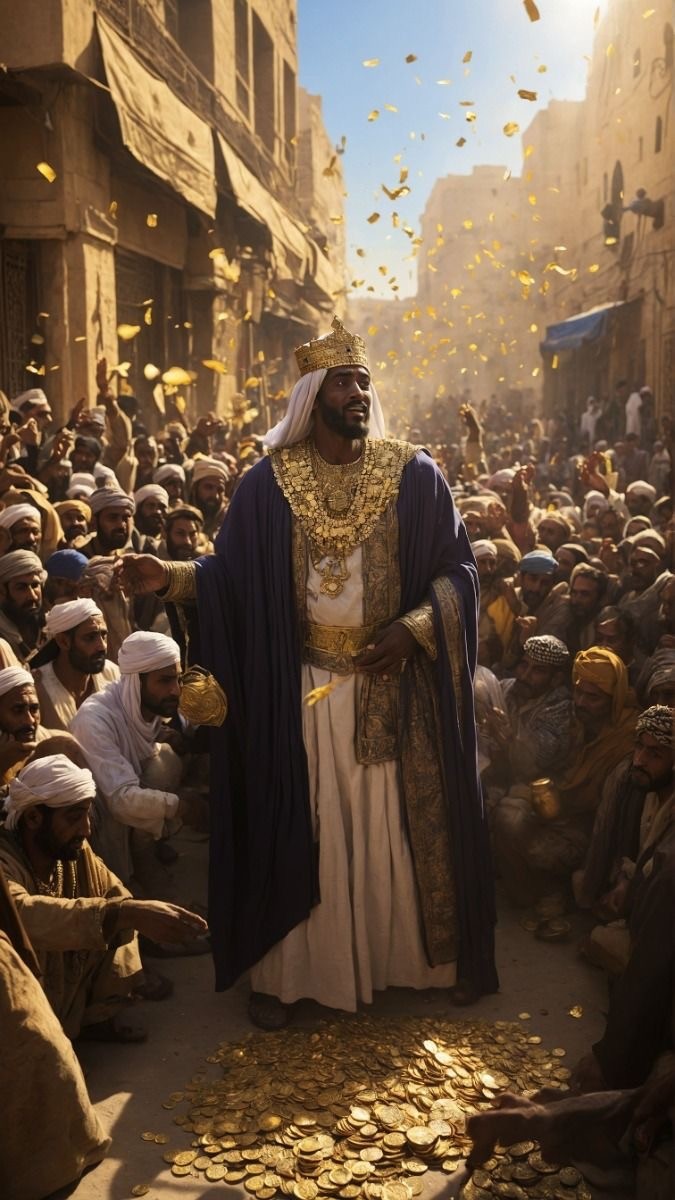
Mansa Musa (Musa Keita) was the most famous ruler of the Mali Empire in the fourteenth century. The title “Mansa” referred to the ruler or king. His reign is generally placed around AD 1312–1337, although medieval dates are not completely certain. Mali was not wealthy simply because Mansa Musa personally possessed enormous quantities of gold.
The empire controlled territory, gold-producing regions, agricultural resources, taxation, and important commercial routes. Gold and salt were the principal commodities in long-distance trans-Saharan commerce. By the fourteenth century, Mali had become one of the great powers of West Africa. Its position allowed it to connect the goldfields of the western Sudan with markets to the north.
2. The Trans-Saharan Highway
The Sahara was not simply a barrier separating North and West Africa. It was crossed by organized caravan routes that connected distant economies. From roughly the early medieval period onward, these routes linked West African gold-producing regions with North Africa, Egypt, the Mediterranean, and ultimately Europe and the Near East.
Gold generally moved north. Salt, textiles, manufactured goods, and other products moved south. Other commodities—including ivory, kola nuts, and enslaved people—also entered these networks. The Metropolitan Museum of Art describes gold as the principal commodity of the trans-Saharan trade and notes the importance of the Bambuk and Bure goldfields.
These routes also moved more than merchandise. Merchants, scholars, languages, religious ideas, manuscripts, and cultural practices traveled with them.
3. Mansa Musa's Famous Pilgrimage
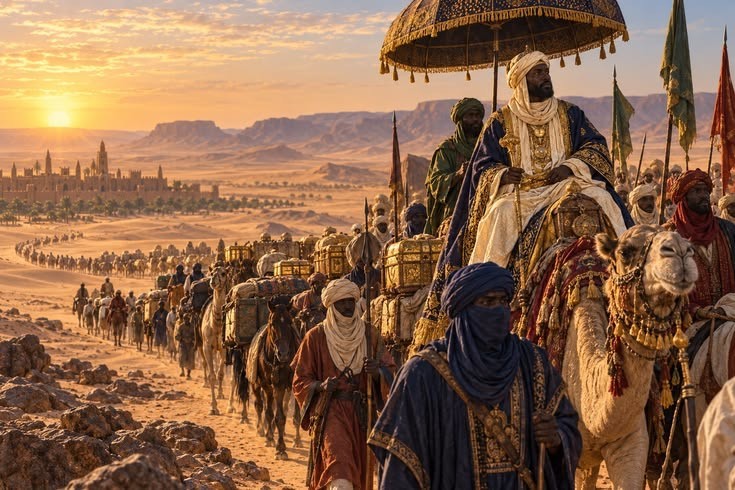
In AD 1324–1325, Mansa Musa made the pilgrimage to Mecca, traveling through Cairo. Medieval accounts describe an enormous royal procession and very large quantities of gold. The Metropolitan Museum of Art notes that Musa's arrival in Cairo carrying approximately a ton of gold was associated with a major disruption in the local gold market.
The pilgrimage made Mali known far beyond West Africa. It demonstrated that a powerful Muslim ruler and a highly organized, wealthy African empire were connected directly to the wider Islamic world.
After his return, Mansa Musa contributed to the development of Timbuktu as a center of Islamic learning. Mosques, schools, scholars, and manuscripts helped make the city one of the best-known intellectual and commercial centers of medieval West Africa.
4. Timbuktu: Trade And Learning
Timbuktu occupied an important position near the southern edge of the Sahara. Its importance came from geography: it was connected to routes moving goods between the Sahel, the Sahara, and North Africa.
By the fourteenth century, Timbuktu was becoming both a commercial center and a center of Islamic scholarship. The Library of Congress describes it as an important commercial center founded around AD 1100 and an important seat of Islamic learning from the fourteenth century onward.
This made Timbuktu a meeting place for people from different parts of Africa and the Islamic world. It is within this larger commercial setting that the Jewish connection must be understood.
5. Jewish Merchants And The Trans-Saharan Trade
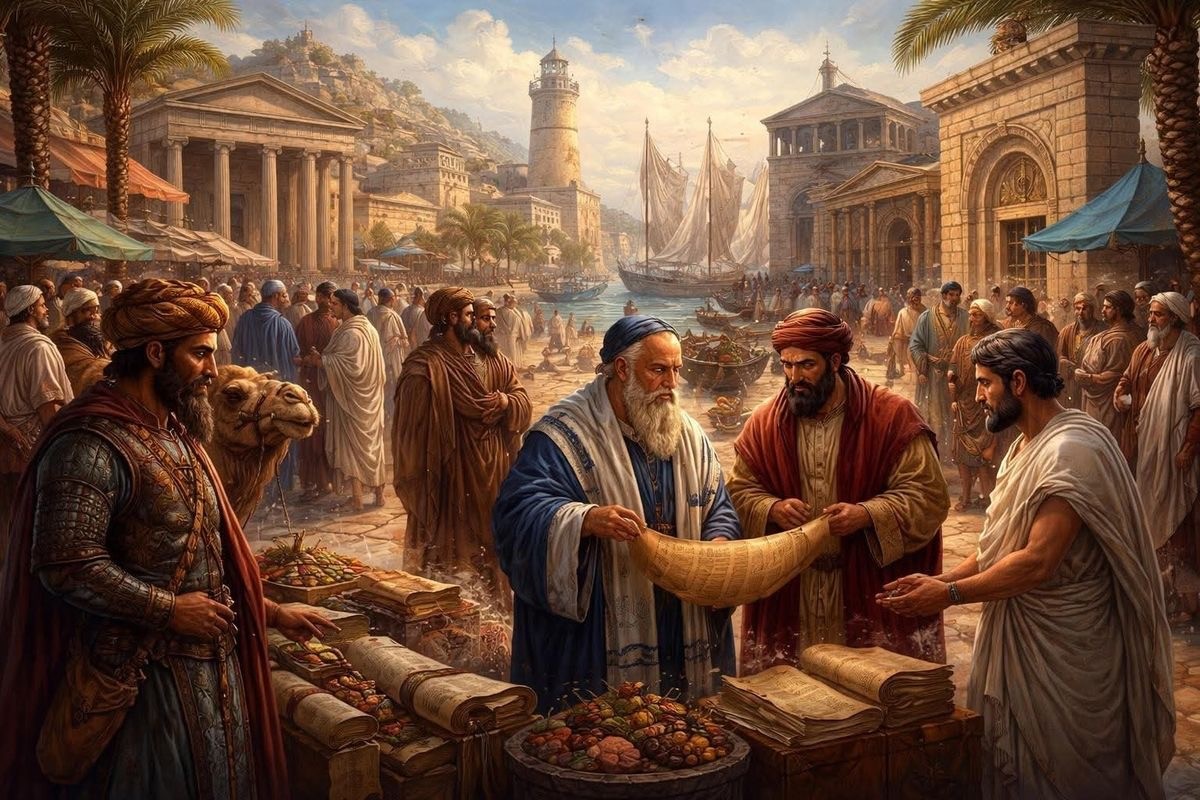
Jewish participation in North African and trans-Saharan commerce is historically documented. Historian Michel Abitbol studied Jewish merchants from the Maghreb and their involvement in trans-Saharan commerce from approximately the eighth through fifteenth centuries.
These merchants operated within a commercial system that connected North Africa with West African kingdoms and trading centers. The principal economic attraction was West African gold, along with other commodities.
This means there is a genuine historical connection between Jewish merchants and the commercial world that connected North Africa with West Africa.
However, an important distinction must be maintained: evidence that Jewish merchants participated in trans-Saharan commerce does not automatically prove that Mansa Musa had Jewish advisers, that Jews controlled Mali's economy, or that the population of Mali was descended from ancient Israelites.
6. The Trade Was Bigger Than Any One People
The trans-Saharan system involved many peoples. Muslim Arab and Berber merchants, West African traders, Jewish merchants, local rulers, caravan specialists, scholars, and other communities could participate at different points.
The system is best understood as a network rather than as a single ethnic or religious enterprise. Different groups could occupy different roles, and commercial relationships could change over time.
Jewish merchants therefore belong in the story, but they should not be presented as the only or dominant group responsible for the trade.
7. The Jewish Presence In West Africa
There are traditions and historical accounts concerning Jewish communities in the western Sahara and later in areas associated with Timbuktu and Tindirma. Some sources describe communities identified as Jewish or as “Bani Israel,” while later traditions connect Jewish settlement in the region with North African and Iberian Jewish migration.
The chronology is important. A Jewish commercial presence in the broader trans-Saharan world can be discussed for the medieval period, but later Jewish settlement—especially communities connected with the expulsion of Jews from Spain and Portugal after 1492—belongs to a later historical period than Mansa Musa's reign.
Consequently, later Jewish communities in Timbuktu should not automatically be projected backward into the fourteenth-century court of Mansa Musa.
8. Three Questions That Must Not Be Confused
Jewish merchants in African trade: This is a historical question, and evidence exists for Jewish participation in broader North African and trans-Saharan commercial networks.
Jewish communities in West Africa: This is also a historical question, but the dates, size, locations, and continuity of particular communities must be examined source by source.
West African peoples descended from ancient Israelites: This is a much larger genealogical and population-history claim. It cannot be established merely from evidence that Jewish merchants traveled through West Africa.
9. What This Does—And Does Not—Tell Us About Israelite Ancestry
If the larger question is whether particular West African populations contain ancestry from ancient Israel, the trans-Saharan trade provides a possible historical pathway for contact and movement of people—but contact is not proof of ancestry.
To investigate ancestry responsibly, several kinds of evidence would need to be considered together: early written records, archaeology, linguistics, population genetics, genealogical traditions, and the dates at which particular communities appear in the historical record.
A tradition claiming Israelite ancestry should therefore be examined on its own evidence rather than being treated as proven merely because Jewish merchants were active in the region.
10. Connection Still Matters
The historical importance of this material is that it demonstrates how connected medieval Africa was to the wider world. Mali was not an isolated kingdom. Its gold entered international markets; its rulers interacted with the wider Islamic world; its cities attracted merchants and scholars; and trans-Saharan routes connected West Africa with North Africa, the Mediterranean, and the Near East. Jewish merchants were part of that wider commercial environment. Their presence gives us another piece of the complicated human story that crossed the Sahara.
11. A Simple Historical Picture
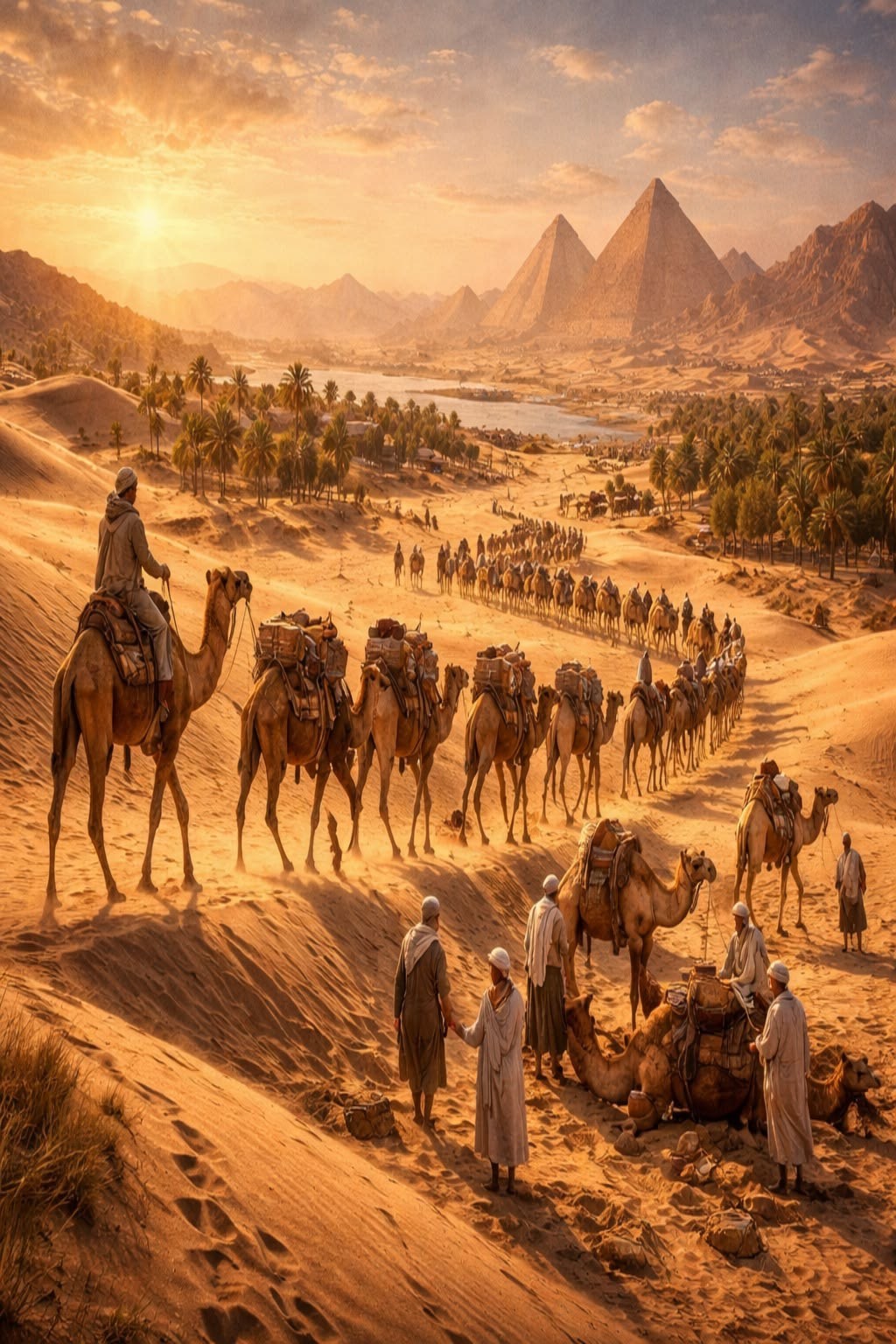
Think of the Sahara as a highway rather than a wall.
- West African goldfields → Mali and other West African kingdoms.
- Trading centers such as Timbuktu and Walata → caravan routes across the Sahara.
- North African markets → Egypt and the Mediterranean.
- From the Mediterranean → European and Near Eastern markets.
- Along the same routes → people, languages, religious ideas, manuscripts, and cultural influences.
Jewish merchants participated in portions of this larger network. That participation is historically significant, but it should not be expanded into claims that the evidence does not support.
Mansa Musa's story is not simply a story about a fabulously wealthy king. It is a window into a medieval African world that was deeply connected to international commerce, Islam, scholarship, and long-distance travel.
The Mali Empire occupied a crucial position in the trans-Saharan gold trade. Timbuktu developed into a major commercial and intellectual center. Jewish merchants participated in the broader North African and trans-Saharan commercial system, creating genuine historical connections between Jewish communities and the commercial world of West Africa.
But historical precision matters. Jewish merchants traveling through or trading with West Africa does not, by itself, prove that West African populations were descended from ancient Israelites. That question remains a separate historical and genealogical investigation.
The strongest conclusion supported by the evidence is therefore straightforward: medieval West Africa was part of a vast interconnected world, and Jewish people were among the communities participating in some of the networks that connected the Sahara, West Africa, North Africa, and the Mediterranean.


