What Jesus Meant When He Said the Spirit Had Not Yet Come
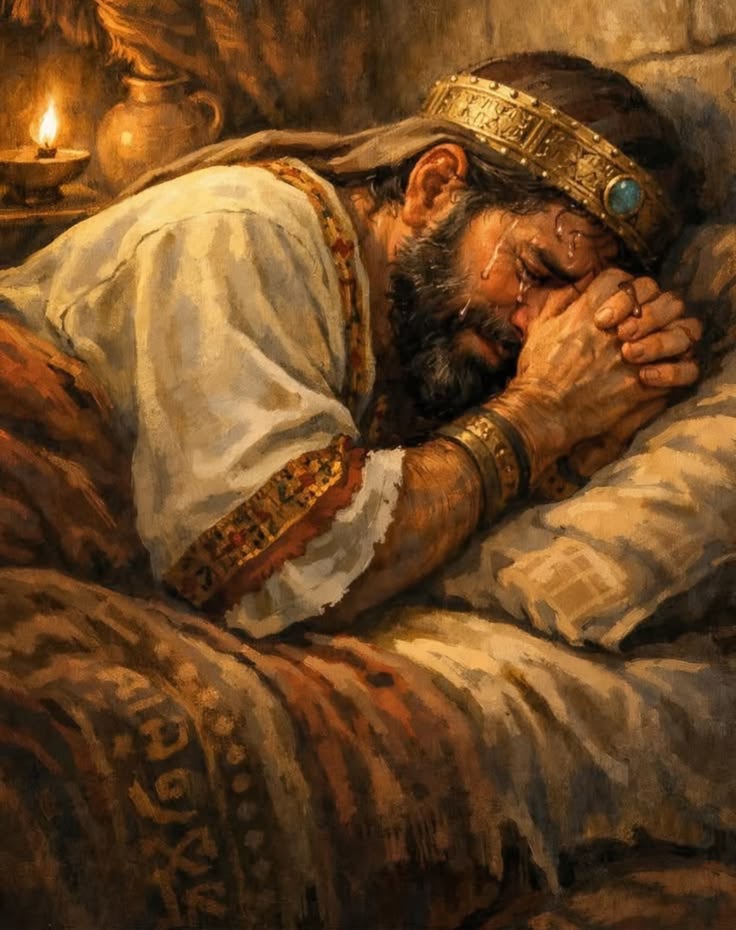
Psalm 51 contains a line that puzzles many readers who know the New Testament. After his sin with Bathsheba, David prays: "Cast me not away from your presence, and take not your Holy Spirit from me." Psalm 51:11
How could David, living a thousand years before Christ, know about the Holy Spirit? And how does this fit with Jesus saying.. "Nevertheless I tell you the truth; It is expedient for you that I go away: for if I go not away, the Comforter will not come unto you; but if I depart, I will send him unto you." John 16:7
The answer lies in two different ways the same Spirit works.
David's prayer was born from a memory:
Psalm 51 was written after Nathan confronted David. (In 2 Samuel 12, the prophet Nathan confronts King David about his secret adultery with Bathsheba and his orchestration of the death of her husband, Uriah the Hittite). David is not writing theology. He is afraid of becoming Saul. The commentary tradition notes: Undoubtedly David recalled that the Lord had removed His Spirit from King Saul, David's predecessor.

God's Holy Spirit had been poured upon David when he was first anointed by Samuel to the kingly office. That anointing is described in 1 Samuel 16:13-14. Samuel took the horn of oil, and anointed him in the midst of his brethren: and the Spirit of the LORD came upon David from that day forward. So Samuel rose up, and went to Ramah. But the Spirit of the LORD departed from Saul.
The Holy Spirit in the Old Testament
The Hebrew phrase David uses, ruach kodesh, holy breath, appears also in Isaiah 63:10-11. In the Old Testament, the Spirit is fully divine but works in a specific pattern: As Creator with the Father and Son, as the Spirit of prophecy upon Moses, the prophets, the judges, as Spirit that comes upon a king, priest, or craftsman for a task.
As one classic summary notes: The Spirit of God in some sense had come, before the death of Christ; he had appeared in the creation of all things out of nothing, as a joint Creator with the Father and Son; he came as a spirit of prophecy upon the inspired writers.
The pattern is upon, not yet within, and for offices that man is to fulfill in the work of the Lord as depicted in Romans 12:4-18, not yet for permanent adoption. And because it was for offices, it could be withdrawn.
Jesus In The Book Of John
"Nevertheless I tell you the truth; It is expedient for you that I go away: for if I go not away, the Comforter will not come unto you; but if I depart, I will send him unto you." John 16:7
John himself explains in John 7:39: the Spirit was not yet given because Jesus was not yet glorified. The old commentators: "but he was not come in so peculiar a manner as he afterwards did; as the promise".
The "peculiar manner" is Pentecost. Old Covenant: Spirit upon a few, for a time, for a mission. New Covenant: Spirit within all the baptized, to remain, to make them temples. Jesus calls Him "Another Paraclete," taking the place of Jesus himself. The role of the Holy Spirit is to take the place of the physical presence of Jesus.
From Anointing to Indwelling
Comparison
In David:
- Spirit comes upon David at anointing
- Given to king/prophet for office
- Can depart—as from Saul
- Fear: "Take not your Holy Spirit"
In the Church after Pentecost:
- Spirit comes upon Church at Pentecost
- Given to all the baptized for sonship
- Will abide forever (John 14:16)
- Promise: "I will not leave you orphans"
David knew the Holy Spirit—truly. What he did not yet know was how far that same Holy Spirit would go — not just to rest upon a king for a time, but to dwell within every believer forever.


