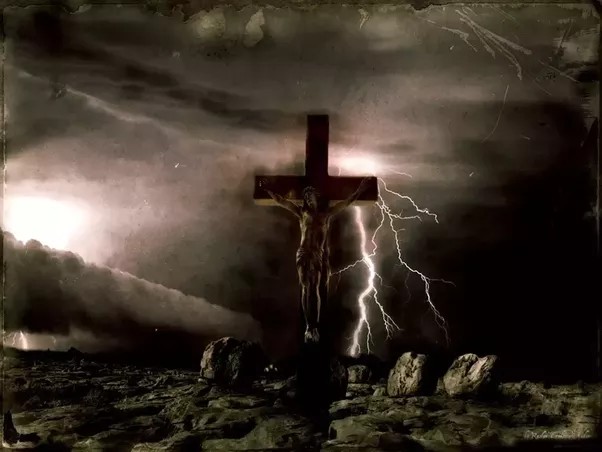
When you think about the Passion of Christ, you first need to understand a bit about the practice of crucifixion itself, which started in Rome. Matthew 27:29-46, Mark 15:16-39, Luke 23:33-47, John 19:16-36
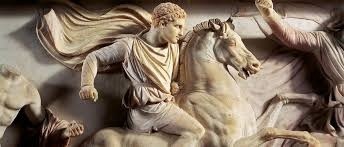
Crucifixion first began among the Persians. Alexander the Great introduced the practice to Egypt, and the Romans learned it from the Carthaginians during the Punic Wars, a series of three wars fought between Rome and Carthage from 264 BC to 146 BC.
Roman Crucifixion
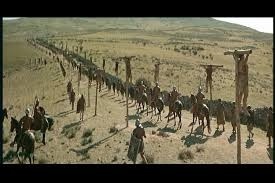
Roman crucifixion was usually reserved for slaves, foreigners and criminals. Roman law usually protected Roman citizens from crucifixion, except in the case of desertion by soldiers.
People were crucified naked, not with loin cloths — part of the experience was humiliation.
Women Crucified
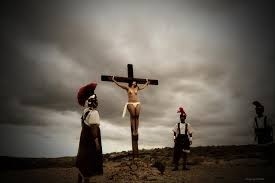
Women were crucified on rare occasions. As recorded in the writings of Josephus' Antiquities (18.79f), a Roman woman was crucified under Tiberius.
A woman named Blandina, during the persecutions of Christians in Lyons, was crucified upside-down and scourged naked. This is found in the writings of Eusebius of Caesarea (H.E. V.1.55).
Persian Crucifixion
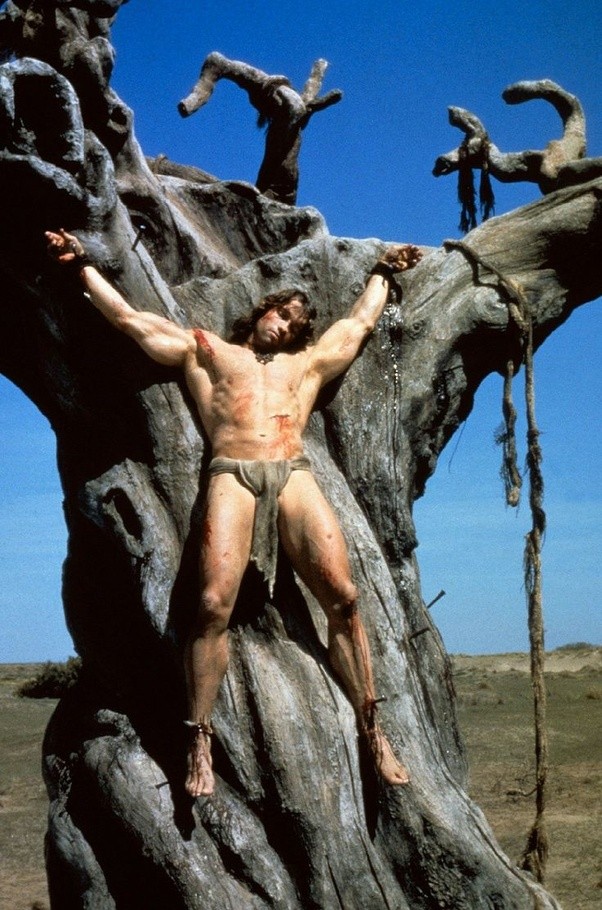
In its earliest form of crucifixion, the victim was either tied to a tree or was tied to or impaled on an upright post — Persians (550–330 BC), Carthaginians (814–146 BC) and Macedonians (808–399 BC).
The Roman Cross
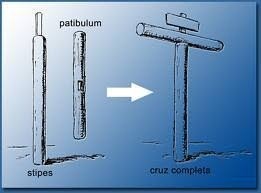
A true cross was characterized by an upright post (stipes) and a horizontal crossbar (patibulum), which had several variations.
Crucifixion practices varied by geographic region and in accordance with the imagination of the executioners. Crucifixion was typically carried out by specialized teams, consisting of a commanding centurion and four soldiers. The attending Roman guards could only leave the site after the victim had died.
The Romans would precipitate death by deliberate fracturing of the tibia and/or fibula, spear stab wounds into the heart, sharp blows to the front of the chest, or a smoking fire built at the foot of the cross to asphyxiate the victim. Some victims suffered sticks forced upwards through their groin.
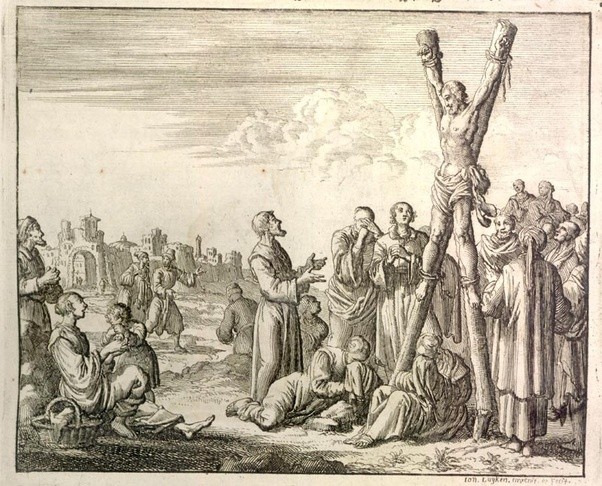
Other variations — St Andrew’s cross, AD 60
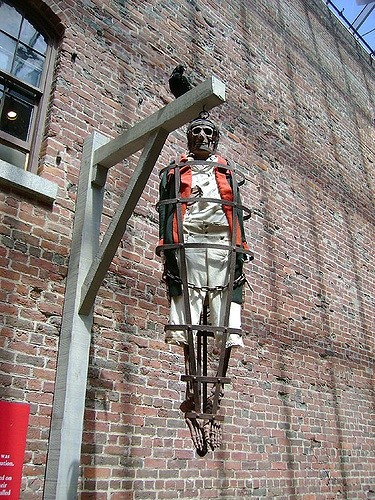
Gibbeting
The Cross Used on Jesus
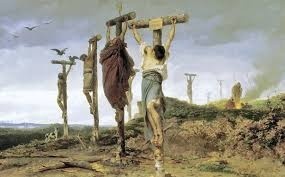
Archaeological and historical evidence indicates that the low Tau cross was used by the Romans in Palestine at the time of Christ.
A titulus, or small sign, stating the victim’s crime was usually placed on a staff, carried at the front of the procession from the prison, and later nailed to the cross so that it extended above the head.
Scourging
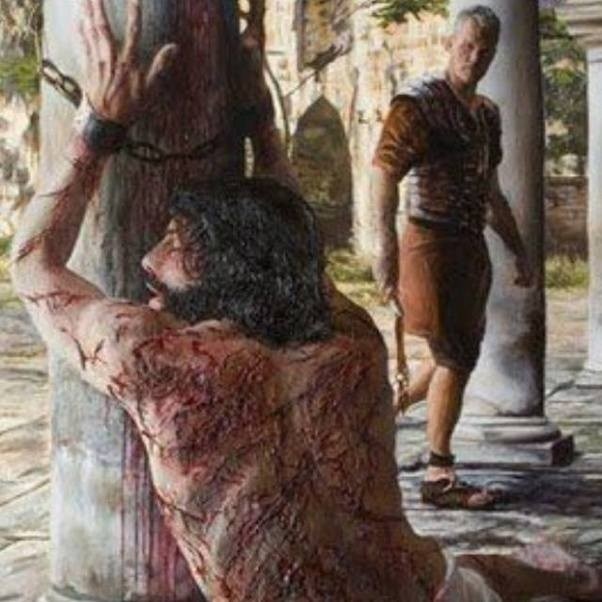
The Jews had an ancient law prohibiting more than forty lashes. The Roman legionnaire used a flagrum, a short whip consisting of several heavy leather thongs with two small balls of lead attached near the ends of each, called a cat of nine tails.
The thongs cut through the skin, then cut deeper into the subcutaneous tissues, producing an oozing of blood from the capillaries and veins of the skin, and arterial bleeding from vessels in the underlying muscles.
The skin of the back is left hanging in long ribbons and the entire area is an unrecognizable mass of torn, bleeding tissue.
The Resulting Condition
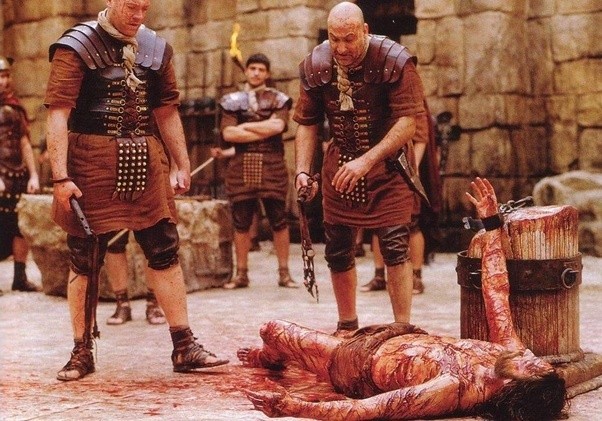
Scourging produces orthostatic hypotension — delayed constriction of the lower body’s blood vessels. Blood pools in the vessels of the legs and less is returned to the heart, leading to reduced cardiac output. It also produces hypovolemic shock: decreased blood volume in the body, more specifically a decrease in the volume of blood plasma.
The scourging and mocking of Jesus lasted until 9 AM. The Roman soldiers put Jesus' clothes back on him and then led him and the two thieves to Golgotha to be crucified.
The Crown of Thorns
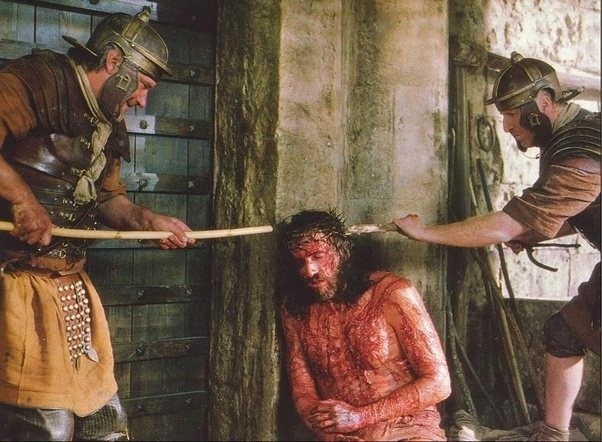
The guards place a crown of thorns on Jesus' head both to cause him pain and to mock him. Matthew 27:29, Mark 15:17 and John 19:2, 5. This was a direct fulfillment of biblical prophecy.
Isaiah 53:5 — “But he was wounded for our transgressions, he was bruised for our iniquities: the chastisement of our peace was upon him; and with his stripes we are healed.”
Cross Beam or Whole Cross?
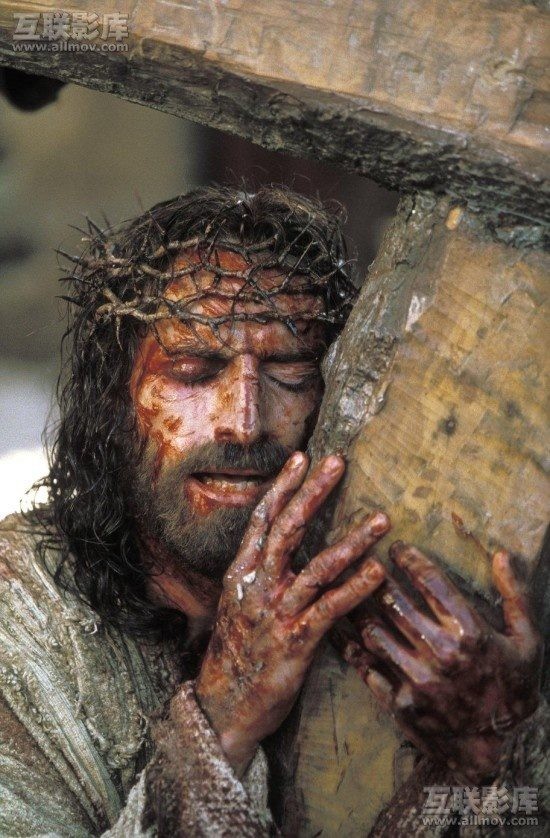
Jesus could not have carried the whole cross from the Praetorium of the Fortress Antonia — the seat of government of the Procurator of Judea, Pontius Pilate — to the site of crucifixion one third of a mile away (600 to 650 meters).
An entire cross weighed 300 lbs; the crossbeam or patibulum weighed 100 lbs. No person could carry an entire cross that distance. The stipes were permanently embedded in the ground. Simon of Cyrene was ordered to carry Christ’s crossbeam, and the procession then made its way to Golgotha (or Calvary), the crucifixion site. (Luke 23:26, 33; Matthew 27:32)
Nailing to the Cross
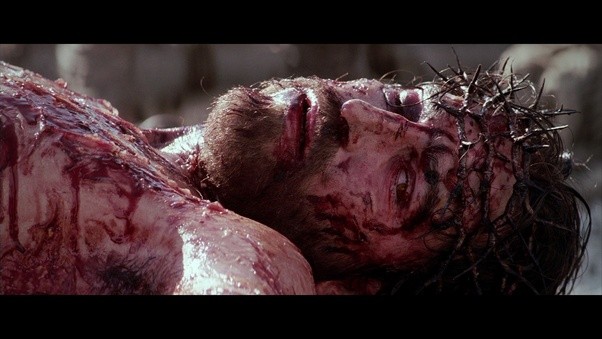
When the victim was thrown to the ground on his back, his scourging wounds most likely would become torn open again and contaminated with dirt. With each respiration, the wounds would be scraped against the rough wood of the stipes. As a result, blood loss from the back probably would continue throughout the crucifixion ordeal.
Hands or Wrists?
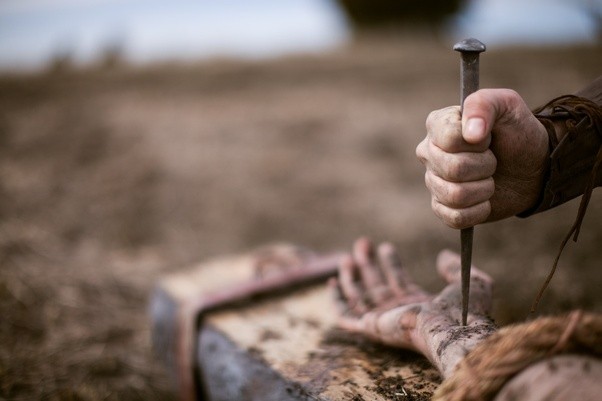
Customarily the wrist is considered to be a part of the hand. The iron spikes were driven between the radius, ulna and the two rows of carpal bones, which produces no fractures.
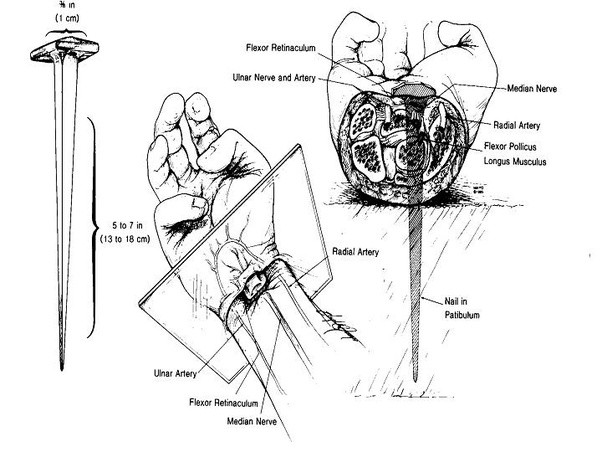
The driven nail would crush or sever the large sensorimotor median nerve. The stimulated nerve would produce excruciating bolts of fiery pain in both arms.
Nails driven through the palms will strip out between the fingers when made to support the weight of the human body. With arms outstretched but not taut, the wrists were nailed to the patibulum. The ligaments and bones of the wrist can support the weight of a body hanging from them, but the palms cannot.
The Greek word for hands is “cheir”; there is no Greek word for “wrists” in the New Testament, because they are considered the same.
Nailing the Feet
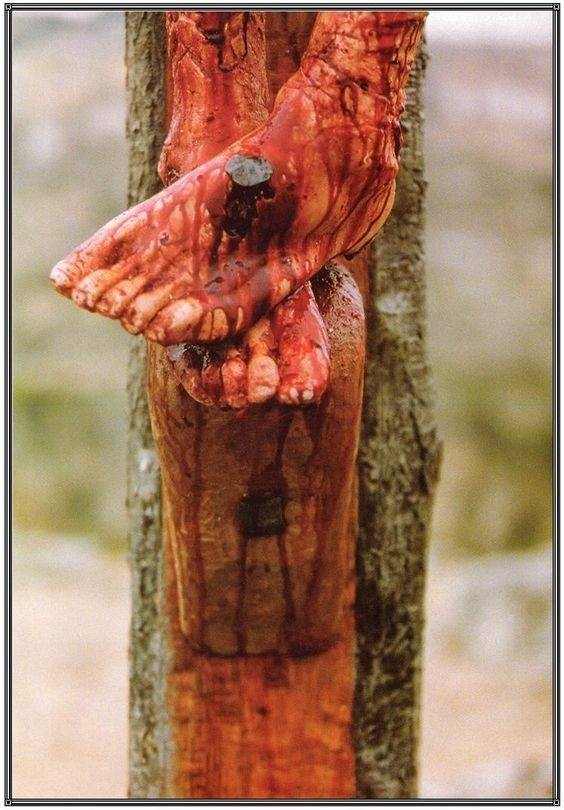
The left foot is pressed backward against the right foot on the sedile, and with both feet extended, toes down, a nail is driven through the arch of each, leaving the knees moderately flexed.
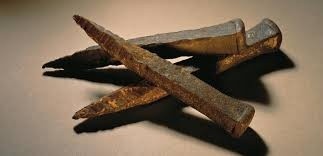
The nails for the feet were 4.5 inches long.
The Titulus
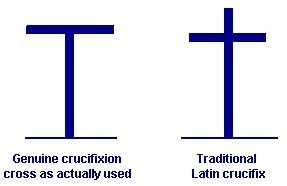
The titulus was attached above Jesus' head and was written in three languages — Hebrew, Greek and Latin (John 19:20). Note: the Latin cross has the patibulum a third of the way down from the top of the cross; on the Tau it is at the top.
Titulus Crucis
Titulus Crucis, Latin for “Title of the Cross,” is a piece of wood claimed to be a relic of the True Cross. It is kept in the church of Santa Croce in Gerusalemme, Rome, founded in AD 325 by Helena, who discovered the relic; she was the mother of the Roman Emperor Constantine the Great (306 to 337 AD). Constantine replaced Diocletian as Emperor and he was a Christian.
The board is made of walnut wood, 9.8 × 5.5 inches in size, 1 inch thick, and weighs 1.5 pounds. It is inscribed on one side with three lines, of which the first is mostly destroyed. The second line is written in Greek letters with reversed script, right to left; the third line is in Latin letters, also with reversed script.
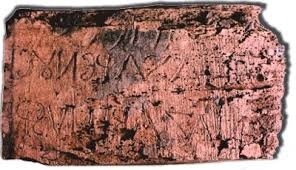
“Jesus of Nazareth, King of the Jews.”
The Seven Sayings
Jesus spoke seven times from the cross. Speech occurs during exhalation, so these short, brief words were particularly difficult and painful. These sayings are referred to as the words of forgiveness, salvation, relationship, abandonment, distress, triumph and reunion.
It is important to note WHAT Jesus said while He was in agony: He did not curse His enemies.
Luke 23:34 — “Then said Jesus, Father, forgive them; for they know not what they do.”
Luke 23:43 — “And Jesus said unto him, Verily I say unto thee, Today shalt thou be with me in paradise.”
John 19:26-28 — 26 “When Jesus therefore saw his mother, and the disciple standing by, whom he loved, he saith unto his mother, Woman, behold thy son! 27 Then saith he to the disciple, Behold thy mother! And from that hour that disciple took her unto his own home. 28 After this, Jesus knowing that all things were now accomplished, that the scripture might be fulfilled, saith, I thirst.”
Matthew 27:46, Mark 15:34 (both accounts are in Aramaic) — “And about the ninth hour Jesus cried with a loud voice, saying, Eli, Eli, lama sabachthani? that is to say, My God, my God, why hast thou forsaken me?”
Luke 23:46 — “And when Jesus had cried with a loud voice, he said, Father, into thy hands I commend my spirit.”
John 19:30 — “When Jesus therefore had received the vinegar, he said, It is finished: and he bowed his head, and gave up the ghost.”
Cause of Death
“But one of the soldiers with a spear pierced his side, and forthwith came there out blood and water.” John 19:34
Jesus died at about 3 PM on a Wednesday.
Spear of Destiny — The Holy Lance
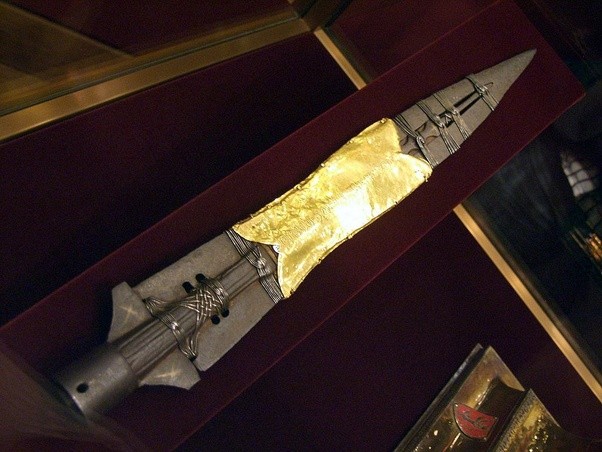
The Jews did not want the bodies to remain on the crosses after sunset, the beginning of the Sabbath. The soldiers broke the legs of the two thieves, but when they came to Jesus and saw that he was already dead, they did not break his legs. Rather, one of the soldiers pierced his side with an infantry spear — later referred to as the spear of destiny, or point of the lance — which produced a sudden flow of blood and water.
Later that day, Jesus' body was taken down from the cross and placed in a tomb. (John 19:31-37)
Location of the Spear
In 615 AD, Jerusalem and its relics were captured by the Persian forces of King Chosroes II.
The point of the lance had been broken off and was given in the same year to Archbishop Nicetas of Nicomedia, who took it to Istanbul — aka Constantinople, modern-day Turkey — and deposited it in the church of Hagia Sophia, and later in the Church of the Virgin of the Pharos in the southern part of the Palace of Constantinople.
It was later acquired by the Latin Emperor Baldwin II of Constantinople in 1244 AD, who later sold it to King Louis IX of France. It was then enshrined with the crown of thorns in the Sainte-Chapelle in Paris, residence of the King of France.
During the French Revolution these relics were removed to the Bibliothèque Nationale in France, but the spear subsequently disappeared. It is now said to be in Rome, preserved beneath the dome of Saint Peter's Basilica archives.
Died on a Wednesday
When Jesus died He was quickly buried because of the oncoming Feast of Unleavened Bread, a high day which began at sunset on Wednesday and ran to sunset on Thursday — Luke 23:46-54.
Luke 23:54 — “And that day was the preparation, and the sabbath drew on.”
Many have assumed this was the weekly Sabbath and that Jesus was crucified on a Friday. In fact there are two distinct high days or Sabbaths referred to in this week:
- The weekly Sabbath — sunset Friday to sunset Saturday.
- The first day of Unleavened Bread, a high annual Sabbath — sunset Wednesday to sunset Thursday.
John 19:31 — “for that sabbath day was an high day” (Exodus 12:16-17; Leviticus 23:6-7).
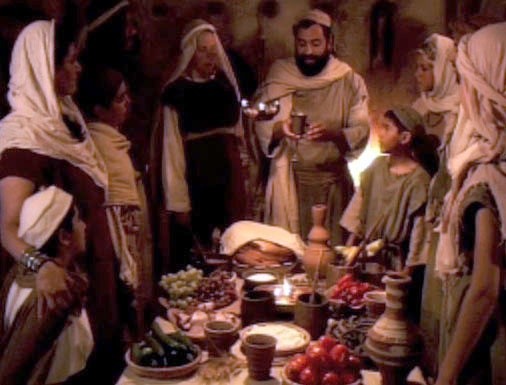
The annual Holy Days usually fall on weekdays other than the regular weekly Sabbath days (sunset Friday to sunset Saturday). In Luke 23:54-56 the women saw Jesus’ body being laid in the tomb just before sunset Wednesday. They “returned and prepared spices and ointments.” Preparing spices would not have been done on a Sabbath day (Friday–Saturday), since it would have been considered a violation of the Sabbath.
This is verified by Mark’s account, which states, “Now when the Sabbath was past, Mary Magdalene, Mary the mother of James, and Salome bought spices” — which they would not have purchased on the high day (Wednesday–Thursday) — (Mark 16:1).
The women had to wait until this annual “high day” was over before they could buy and prepare the spices to be used for anointing Jesus’ body. After purchasing and preparing the spices and oils on Friday, “they rested on the Sabbath according to the commandment” (Luke 23:56).
The second Sabbath mentioned in the Gospel accounts is the regular weekly Sabbath, observed from Friday sunset to Saturday sunset.
Two Sabbaths
Time of death: 3 PM, Wednesday, AD 31.
- Mark tells us the women bought spices after the Sabbath.
- Luke states they prepared the spices before resting on the Sabbath — two different Sabbaths.
John 19:31 — the first Sabbath was a “high day,” the first day of the Feast of Unleavened Bread, which in AD 31 fell on a Wednesday. The second was the weekly seventh-day Sabbath, sunset Friday to sunset Saturday. Jesus died at the ninth hour of the day, or 3 PM (Matthew 27:45-50).
After the women rested on the regular weekly Sabbath (Friday–Saturday), they went to Jesus’ tomb early on the first day of the week (Sunday), “while it was still dark” (John 20:1), and found that He had already been resurrected (Matthew 28:1-6; Mark 16:2-6; Luke 24:1-3).
Jesus was crucified and entombed on Wednesday afternoon, just before the Sabbath began at sunset — the high-day Sabbath, lasting from sunset Wednesday to sunset Thursday, rather than the regular weekly Sabbath, lasting from sunset Friday to sunset Saturday. Jesus rose anytime from 3 PM Saturday; He was already gone early Sunday when Mary arrived (Matthew 28:1-6). Jesus rose precisely three days and three nights after He was placed in the tomb.
The Veil
When Jesus died on the cross, two things happened immediately.
1. Jesus ministers to those in Paradise
Psalm 16:10 — “For thou wilt not leave my soul in hell; neither wilt thou suffer thine Holy One to see corruption.”
Acts 2:31 — “He seeing this before spake of the resurrection of Christ, that his soul was not left in hell, neither his flesh did see corruption.”
Psalm 86:13 — “For great is Your mercy toward me, And You have delivered my soul from the depths of Sheol.”
Jesus went into Paradise to minister to all those who died in faith, from Adam’s death to the time of His arrival in Paradise.
Luke 1:79 — “To give light to them that sit in darkness and in the shadow of death, to guide our feet into the way of peace.”
Hebrews 11:13 — “These all died in faith, not having received the promises, but having seen them afar off, and were persuaded of them, and embraced them, and confessed that they were strangers and pilgrims on the earth.”
Revelation 1:18 — “I am he that liveth, and was dead; and, behold, I am alive for evermore, Amen; and have the keys of hell and of death.”
Jesus went directly into Paradise, or Sheol.
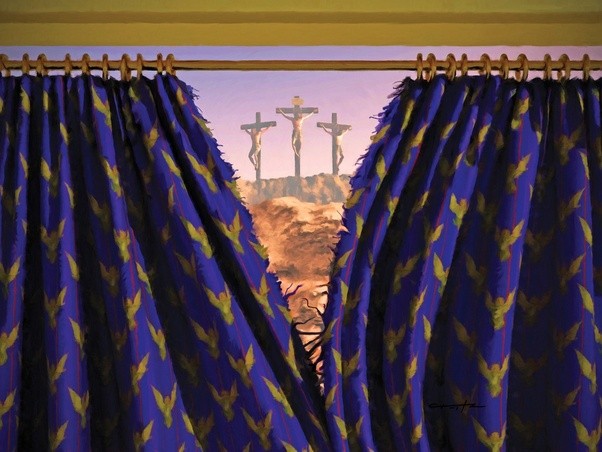
2. The veil at the Temple Mount was torn
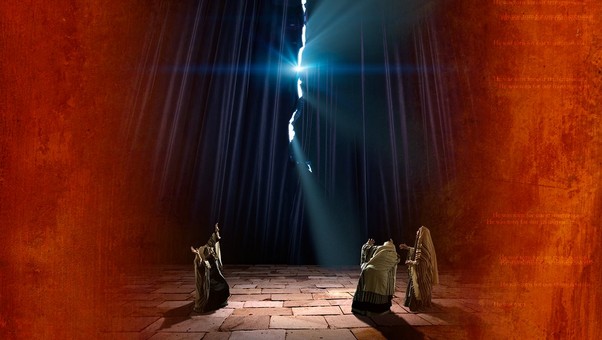
Matthew 27:51 — “And, behold, the veil of the temple was rent in twain from the top to the bottom; and the earth did quake, and the rocks rent.”
Within the Holy Place of the tabernacle there was an inner room called the Holy of Holies. The curtain or veil to the Holy of Holies was a perfect cube — its length, width and height all equal to 15 feet — making the veil 60 feet long, 30 feet high and 4 inches thick. It was comprised of 72 squares sewn together. This veil formed a barrier between the Glory of God and man. It required 300 men to lift it.
What the Torn Veil Means
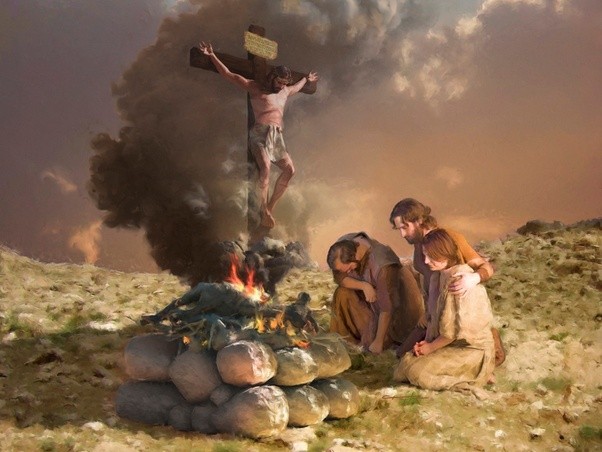
The Old Testament covenant system of relating to God through the priest and ritual sacrifice has been set aside (Hebrews 6:19-20; 10:1-14, esp. v. 10; Romans 8:1-4).
- The Levitical priests continued their service for another 40 years, but they were truly out of work the moment Christ died. Many priests came to Christ in the days following His resurrection.
Acts 6:7 — “And the word of God increased; and the number of the disciples multiplied in Jerusalem greatly; and a great company of the priests were obedient to the faith.”
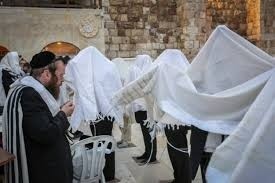
Today there are still Jewish high priests called Kohanim, acting in the lineage of Aaron.
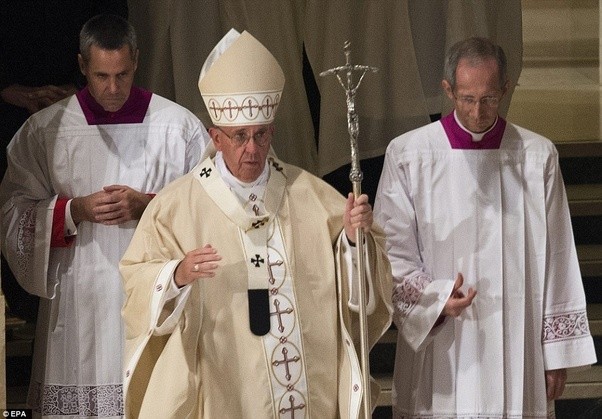
The most blatant manifestation is in the Catholic faith with the advent of the Pope.


