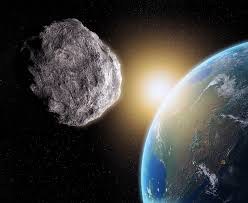
The Bible does not give a verse saying, “the Earth is X years old.” The younger-age calculation comes primarily from adding together genealogies and chronological statements, particularly in Genesis, and then connecting those numbers through the Old Testament. A traditional young-Earth calculation, associated especially with chronologies such as James Ussher’s, puts creation at roughly 4000 BC, making Earth approximately 6,000 years old.
In 1650 AD, Archbishop James Ussher gave a biblical account of the age of the Earth, using an Old Testament period event that corresponded to a known historical date, the death of the Babylonian King Nebuchadnezzar in 562 BC. Then by adding up the generations of the prophets, patriarchs and the 139 genealogies of the Old Testament from Adam to Nebuchadnezzar, Ussher came to the conclusion the date of the Earth was October 22, 4004 BC at 6PM, which was a Saturday.
However, there are important complications:
Biblical genealogies sometimes omit generations. A genealogy isn’t necessarily intended to provide an exhaustive list of every ancestor. There are differences among ancient textual traditions, including the Masoretic, Septuagint, and Samaritan versions, that produce substantially different chronological totals.
Genesis itself does not explicitly say that the genealogies are intended to be used as a continuous chronological clock. Saying “the Bible says Earth is 6,000 years old” is too strong. A better statement is that a particular interpretation of biblical chronology produces an age in the neighborhood of 6,000–10,000 years.
Modern science places the age of the Earth at approximately 4.55 billion years. This isn’t based on one measurement. It comes from several independent lines of evidence, especially: radiometric dating of meteorites and ancient terrestrial materials, ages of the oldest minerals and rocks, lunar samples, radioactive isotope decay, astronomical observations concerning the formation of the solar system.
The thing is that these independent methods converge on approximately the same enormous timescale. The really interesting question or disagreement isn’t simply Bible vs. Science, it’s more accurately, does Genesis require us to interpret its chronology as a literal, continuous 24-hour-day chronology with no substantial chronological gaps?
Christians have answered that question differently for centuries. There are at least three major approaches. And there’s an additional possibility worth examining: whether the Hebrew word yom (“day”) in Genesis 1 necessarily means a 24-hour period in every occurrence.

These other methods of dating the Earth, using rock sediments of the planet, or “sedimentary sequences,” have problems with the counting of the layers of sediment rock. Sediments were thought to be 1000 years old per foot of sedimentary layers. However, with catastrophic flooding events like Noah’s flood, for example, these measurements changed to a foot of sediment every few days, giving planetary dates ranging from 3 million to 15 billion years.
Even the deepest layers of rocks are not the oldest things on earth; rocks cannot survive the violence of earth’s evolution over time.
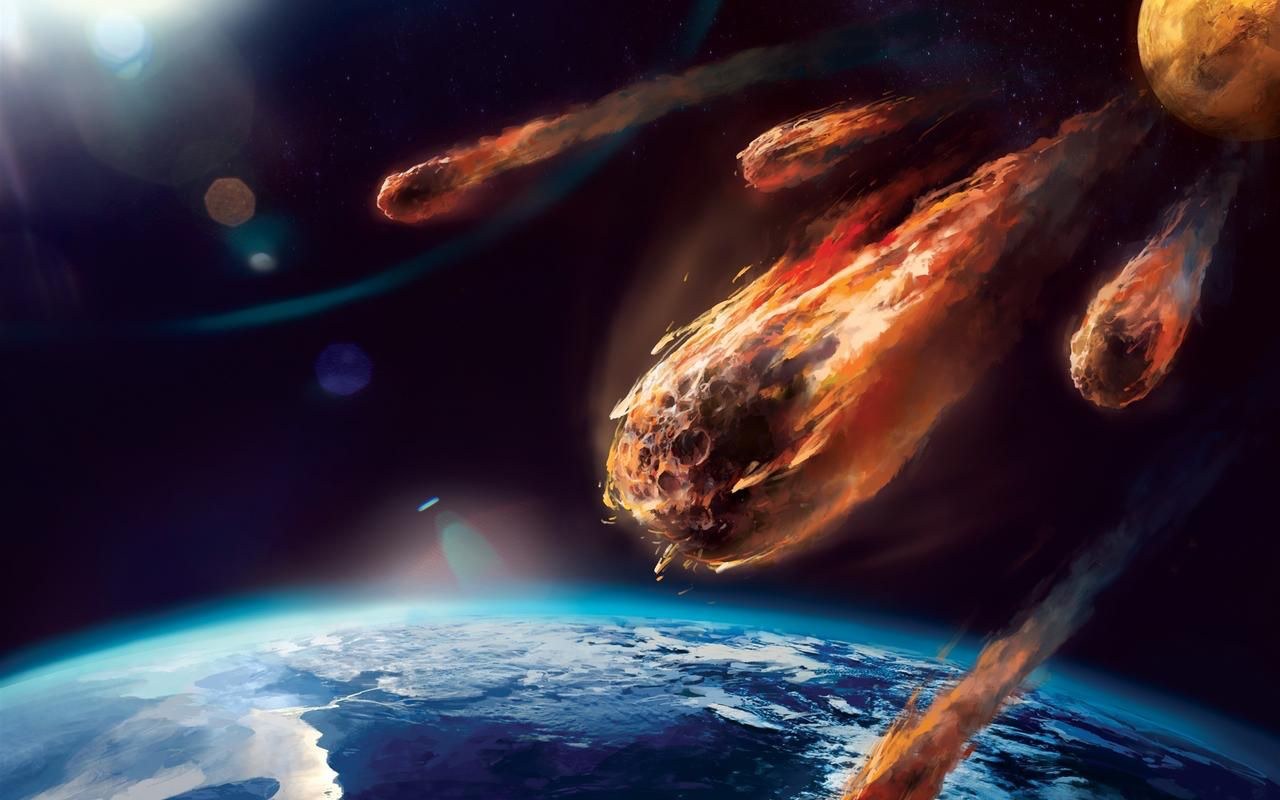
Objects from space were the best calculation. Fragments from an iron asteroid that made a crater in Arizona survived intact. Fragments from the asteroid on the earth would indicate the age of the solar system, including the earth. Picking a rock from this area reveals that the rocks start out radioactive and experience multiple transmutations, until it becomes the stable atom of lead.
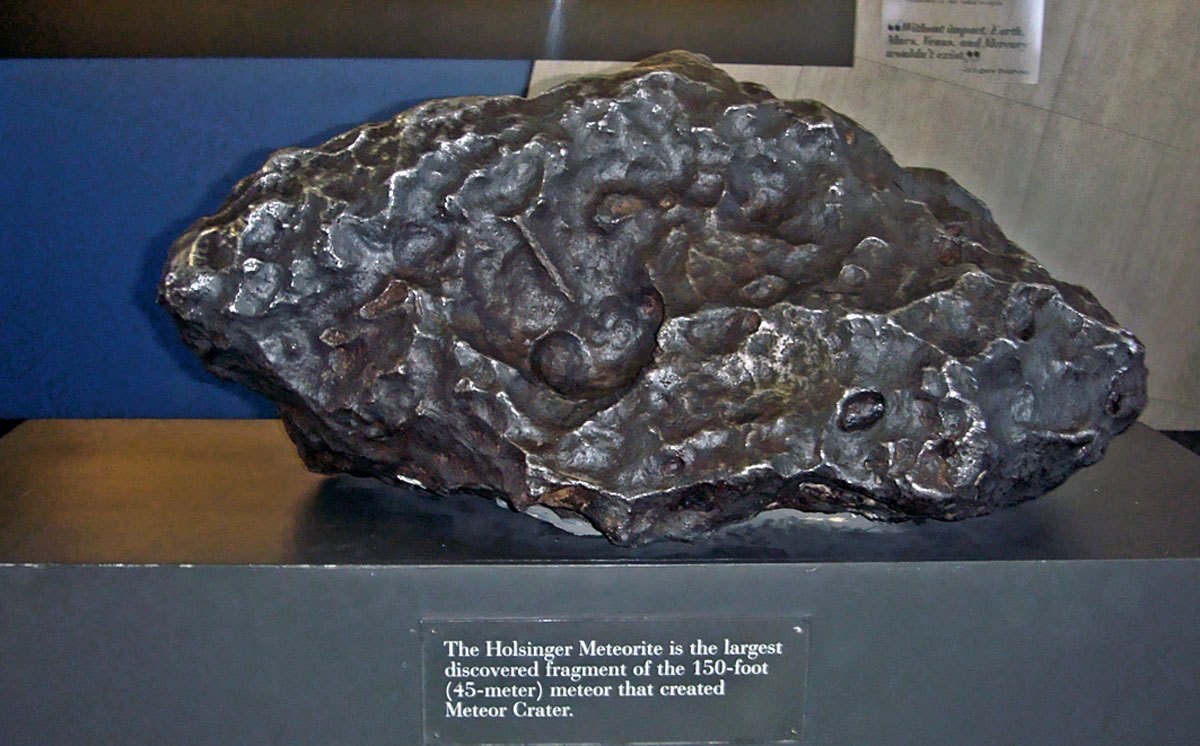
Examining a section of the meteorite, while knowing the constant rate of uranium decay, you can determine the age of the meteor. Then by measuring the amount of lead in the meteor, you can learn the age of the Earth. At least this was the reasoning.
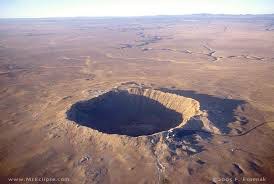
About 50,000 years ago, an iron-nickel asteroid roughly 40–50 meters (130–165 feet) across struck what is now northern Arizona. The impact produced a crater roughly 1.2 kilometers (0.75 mile) across and hundreds of feet deep. The energy was enormous. The impact excavated and blasted out vast quantities of sandstone and limestone, while much of the incoming asteroid was melted or vaporized. Fragments of the meteorite were scattered around the area.
So, in a very literal sense, something came from the heavens, struck the earth dramatically, altered the land and left physical evidence that remains today.
The Meteor Crater gives us a useful case study because the impact itself is relatively young by geological standards, about 50,000 years, yet the rocks it struck are vastly older. In other words, the crater is young, the ground beneath it is ancient. This distinction is important when we examine questions such as: Does the Bible describe the creation of the Earth itself, or the ordering and preparation of an already-existing Earth?
What does Genesis 1 actually mean by “In the beginning God created the heaven and the earth”? Does yom necessarily mean a 24-hour day? Could there be a chronological interval between Genesis 1:1 and 1:2? What do the Hebrew genealogies actually allow us to calculate? Does Scripture require a 6,000-year-old planet, or is that an interpretation built from the genealogies? And, importantly, how do we reconcile catastrophic geological events with the biblical Flood?
Clair Cameron Patterson dated the planet by using a mass spectrometer at the Argonne National Laboratory on an isolated segment of the iron meteorite; he examined data on the uranium and lead isotopes in the meteorite. With the new data, in 1956 he published “Age of Meteorites and the Earth,” the first paper containing the true age of the solar system’s accretion, which was 4.550 Gy ± 70 My, which is to say the World is 4.55 billion years old.
The early conclusions that dated the world as 4–6 thousand years were solely based on approximations using scripture, without considering the depth of the meaning of Genesis 1:1-2:
In the beginning God created the heaven and the earth. And the earth was without form, and void; and darkness was upon the face of the deep. And the Spirit of God moved upon the face of the waters.
Man cannot know how long the Universe and the world has existed before man was placed on the planet. Even the conclusion of science that the world is 4.55 billion years old is guesswork, in part because the meteorite used to date the planet struck an earth that was already in existence in order for the meteor to hit the earth in the first place. It dug deep into the earth’s ground and revealed new samples of the earth which were commingled with the meteor, which is to say that there is no definitive assertion that the particles that were examined were actually earth rocks or rock from the meteor. This distinction is an important aspect of the transmutation of the rock both on earth and with respect to the meteor, which in both instances were heretofore never seen.
What we learned from science’s dating was that a single meteor in the expanse of the Universe, which is riddled with asteroids and the like, was 4.55 billion years old. It could have been a baby in comparison to the true existence of the universe. So we must conclude:
For my thoughts are not your thoughts, neither are your ways my ways, saith the Lord. For as the heavens are higher than the earth, so are my ways higher than your ways, and my thoughts than your thoughts. — Isaiah 55:8-9


